Stevio...LA LA Lovin' It?

I'm British-born Chinese from Bristol, UK. I’m LA-based. I’m a hip hop aficionado. After 15 years in London I moved to LA to pursue a new career and outlook on life.

Back in the 80s I was a DJ. In the 90s I contributed to the world's first street style exhibition at London's Victoria & Albert Museum. In 2011, I had my first interviews published. Today, I’m keeping busy with music, art, photos and writing.

Monday, October 14, 2013

Patti Astor's interview in New York's Vulture webzine #pattiastor

Patti Astor in February 1983 with Keith Haring's "The Smurfs" and " II" (photo credit: Eric Kroll)

New York's Vulture published a great interview with Patti Astor, the "Queen of Downtown" (New York,) to publicize her book about her life story. In it, we're reminded how influential Astor was, even before her starring role in Charlie Ahearn's "Wild Style" hip hop film.
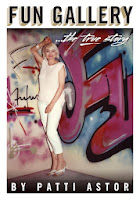
I've interviewed Astor in the past and she knows how to tell a story. But, it's hard to keep up. She was there during the creation of  the urban culture blueprint in the '70s and '80s, yet she'd be the first to say there was no grand plan. The people in Astor's circle include unsung heroes, long forgotten players and a few people whose reputation precedes them. She treats them all the same when she tells her tales.

Check out Vulture here. Even better, go to The Fun Gallery website to buy Patti Astor's self-published book.

Here are a few snatched paragraphs of my favorite parts of Patti's interview by Mary Kaye Shilling.

If you've never heard of Patti Astor, it may be because she’s one of those people who should take credit for things but doesn’t. Back in the day, she was more interested in making sure the young artists she championed — graffiti masters like Dondi, Zephyr, and Futura 2000, as well as Keith Haring, Kenny Scharf, and Jean-Michel Basquiat — were properly respected. She's still at it some 30 years later. 
"We were the first gallery to give one-man shows to graffiti artists," says Astor, poking her head into her former gallery, where a guy is renovating the tiny space. 'Our first hit of the big time was [Fab 5 Freddy’s] show. I remember sitting in the gallery, in that tiny room, and Bruno Bischofberger drives up in a limo like a city bus. He looked like Goldfinger and had a babe on each arm. I didn’t know who he was at the time, but [sculptor] Arch Connelly, who was kind of like our art guardian, later told me that Bischofberger was the second biggest collector in the world after Count Panza.” Astor, who sounds like Roseanne Barr, cackles at how ridiculous the names sound. “Anyway, Bischofberger dumps the babes and pulls out these index cards and starts asking me all these questions: Who is the most important person in graffiti? What do you think of Basquiat?" She snorts derisively. "I couldn’t believe it when I saw Tamra Davis’s documentary about Basquiat, which is really valuable for all the footage of him, but the rest is revisionist bullshit. Bruno and all these other people were like, "Yeah, we were really good friends." And I thought, You fucking pricks! You all treated him so poorly. Fred is the only one in the documentary who was a real friend of his. It really pissed me off.
Diatribes like that could be another reason Astor isn’t better known; she's not what you'd call political. Take, for example, her opinion about Julian Schnabel, who was an aspiring artist and fry cook when he first started hanging out at FUN. “Julian was really nice when he was still a cook,” says Astor. “But he got a real chip on his shoulder because he was a fry cook and not some world-famous fat slob artist. And then, of course, he fulfilled both of those goals. I loved how in his Basquiat he took 40 pounds off himself. That movie also makes me sick — that whole scene of him telling Jean-Michel what to do, like they were friends, which they weren’t.”
Don’t even get her started on Jay Z referencing Basquiat.

Labels: , , , , , , , , , , , ,

Saturday, October 12, 2013

#UNleashed Magazine: "The Past According to Futura" #ArtInTheStreets #Futura

This is the last of four articles I wrote for UNLeashed Magazine in 2011 to celebrate the "Art in the Streets" exhibition at LA's Geffen Contemporary at MOCA (Museum of Contemporary Art.) Reviewing my interview with Futura over two years later I am still in awe of insights he shared with me and the context he gave to the fragments of hip hop history I have experienced since I fell in love with the culture in 1982-83.

My other three UNLeashed Magazine articles can be found here: the beginnings of street art (Patti Astor and Fab 5 Freddy;) the appearance of branded street art (Tats Cru and Scion;) and the business aspect within street art (Nick Walker and Lainya Magana.) 

Photo credit: courtesy of Futura

A 30-year career for a graffiti artist is rare. It takes a special breed of talent and the confidence to take your art beyond the train yard, basketball court and gallery to new platforms and levels of creativity to reach broader audiences. Futura [2000] is one of the few artists who has constantly reinvented himself, always looking forward and rarely looking back. UNleashed Magazine spent an evening talking with Leonard McGurr, aka Futura, at his home in Brooklyn, ahead of his participation in the Art in the Streets show opening at The Geffen Contemporary at MOCA (Museum of Contemporary Art) in Los Angeles.

MOCA exhibition entrance (photo credit: Stevio)

Futura’s graffiti career started in 1970 when McGurr invented his tag (a graffiti writer’s nom de plume), to represent himself in the graffiti underworld and disguise himself from the authorities. “Coming up with the name ‘Futura 2000’ – there were a lot of things that I stole that from…The ‘2000’ was my inspiration and the name became something I live by…and I [have] actually survived 30 years…”

In the 70s, what made Futura 2000 stand out wasn’t his catchy sci-fi tag - after all he was preceded by Paul Renner’s 1920s typeface and Lincoln’s concept car of 1955. He stood out because he painted ‘whole cars’ – trains painted from top to bottom – in what became his signature; abstract and emotional blaze of color. His 1980 painted train raised the bar and created a new aesthetic in graffiti art. Futura lays out the milestones in his long career, “1980 I decide to break with tradition and discover the unknown. The abstract wholecar painted over a three-hour period on a cold night in March would ultimately become iconic. Whoa. who knew?”

Futura 2000 whole car 1980 (photo credit: Henry Chalfont and Martha Cooper)

He made the transition to canvas in the 80s and shared a Lower East Side studio with Fab 5 Freddy. This is the period that will be the essence of Futura’s installation at MOCA. “I have a fantastic painting from 1984, [a] kinda large important painting - seven by nine feet. It was a large painting for its time. This particular painting I gave to my wife when she was pregnant…in the summer of ‘84…that’s 26-27 years ago and it’s a great painting to have as a retrospective [of my work]. And I’m gonna match it with another piece that I haven’t even made yet. I’m gonna make it out there [Los Angeles]. It’s not the ‘yin and the yang,’ but the ‘then and the now’.”

Futura paintings 1984 and 2011, Art in the Streets (photo credit: Stevio)

On the importance of the MOCA show, Futura is very clear. “It is great that Jeffrey [Deitch] has done this, because...people [will] want to talk about the history of the movement…[And] being selected as one of the artists [at MOCA] is awesome…this is probably the first real recognition by an American institution…of the entire movement.[Not just] individuals like Basquiat and Haring who had already been recognized.” As an elder in the graffiti world, Futura is philosophical about what the exhibition will do for the street art genre as well as artists’ careers. “I’m not looking at the show [to say] ‘hey I’m in MOCA!’ It’s one aspect of me as a person. It’s not that important! I’m sure to some of these kids this is it! This is like ‘oh, God dude I’m in! I’m gonna cash in on this,’ or whatever the motivation will be. I’m grateful and I will represent myself very well.”

“I think this show will inflate some peoples’ prices and that should be good for them. I’m grateful for MOCA and I’m excited, but I don’t see it as the defining moment in my career. I think it’s a great moment for the movement…but how many people are in the space, literally inside the show? How many kids who didn’t make it in the show are part of the exterior events? [Ask yourself] not who’s in, [but] who’s out!” 

Art in the Streets artist group photo (credit: Stevio)

Futura Past  You have to understand Futura’s past to truly understand his point of view. He got recognition during the first gallery love affair with graffiti art in the 80s. He exhibited in the Tony Shafrazi gallery in 1982 alongside Kenny Scharf, then again in 1984 with a solo show. But he was given the cold shoulder after galleries and collectors turned their backs on graffiti art and moved on to more traditional, highbrow art. In response to that boom and bust era, he looked for other avenues to channel his creativity. He reflected, “I didn’t want to be part of the movement 24/7…I diversified my creativity is how I see it. I did a lot of things with my talent and I wasn’t a one-dimensional player. [Now, with MOCA] the art world has come to me. I’ve tried to avoid it…but here it is.”

Earlier this year, fine art auctioneer house, Bonhams, sold one of Futura’s installation pieces painted live in 1983 while he was on tour with the UK punk rock band, The Clash. The four by eight foot painting sold for just under $60,000. “It’s an awesome price and it’s great for the person who profited from that,” said Futura, “I’m not bitter [or asking] ’where’s my percent[age]?’ I don’t worry about those things or play the numbers game.”

credit: Bonhams

“I’m not a collector of my own work, or for that matter of fact, anyone’s work…there’s only one painting in my apartment [and it’s] of my kids. It’s not like I need to be around my work…if there is some potential business [from MOCA I will look at it], but I will [continue to] be as stingy and cheap with my own work as I’ve ever been. Hey, I don’t even have [any of] it! So it’s hard to come by. Just because there’s going to be a rush on it doesn’t mean I’m going to fill it either…I’m never drawn by that [money], that’s not my motivation.”

Outernational  As with many things, foreign collectors seem to appreciate the graffiti aesthetic more than at home. Collectors of Futura’s work outside of America have been consistently supportive over the years, so why not move abroad like some of his contemporaries? Futura explained how it was in the early 80s, “People like Jon One, Toxic, Quik, didn’t really expatriate until ‘83/’84…First of all, I’m from New York so I’m not going anywhere, although I have been to 70 countries…and I loved it. All the subsequent exhibitions were based on European interest in our work. [It came from] the people in France who bought; the Dutch who bought a lot, as well as the Germans and the Italians. They all supported our art, whereas no one in New York was supporting it, except for the high-end guys – Basquiat, Haring, Scharf. I sold some paintings; no doubt, I had a moment, but no one was buying graffiti art with any consistency. I was never going to leave [New York]; but people left because that’s where the money was.”

Bonjour hip hop  In 1982, Futura visited France for the first time as part of the New York City Rap Tour. This was masterminded by journalist Bernard Zekri who befriended Afrika Bambaataa (founder of Hip Hop’s influential Universal Zulu Nation) and Jean Georgakarako (better known as Jean Karakos) the man behind French new wave record label, Celluloid Records. This period is one of folklore, but it is clear that commercial interests had already infiltrated hip hop. Futura recalls that time, “Prior to the tour, there was a French rush on our movement [hip hop] and it occurred with a few articles that were done with [Fab 5] Freddy, myself and Bambaataa about this new phenomenon…it wasn’t called hip hop yet. The creation of the records [I painted the sleeves] was all part of Jean Karakos’s marketing strategy.”

Talking about his work for Celluloid and the 1982 Celluloid release of his record Escapades of Futura 2000, “I did those covers [for Celluloid] but those records were an exploitation event and I never got a dime, but I know that they cut a deal with The Clash to get their music. That record was meant to happen as a cassette tape and it predates the [New York City] Rap Tour by seven months. So, when I came back to New York I said to Fred [Fab 5 Freddy] ‘Yo, you gotta listen to this little rap record I did…’ It was my homage to graffiti, but I never wanted that to be a fucking record…and Celluloid cut other records (Fab 5 Freddy’s Change the Beat, DST’s Megamix II and Phase II’s The Roxy). All this record shit gets done prior to this tour. Why? Because they have to sell something on the tour. At the time, I was totally manipulated, but I didn’t mind because ‘we were all going to Paris!’”


Fast Forward to the 90s  “1985 the Eighties peak; mid decade... those with skills and talent find new opportunities. those without; are trapped in history. Bummer!” Futura moved on to the next phase in his career. By the 90s, the fate that Futura firmly believes in continued to push his brand of art internationally into other avenues. “…I met James Lavelle from Mo’Wax in Berlin. As a result of meeting James, I met Hardy [Blechman of Maharishi for whom Futura designed a range of clothing]. A few years later, I hooked up with the Tokyo ‘Harajuku’, über-cool set. Things were happening without any plan or forecast. The gates opened up in Japan. Japan wound up being this place that supported me…and gave me opportunities that I’d never seen before in America…I love Japan. And James was my key…as he was always in with those guys.”

Cultural Overload   By 2005, Futura saw the urban culture swelling in popularity. “2005 the MOVEMENT is not just GLOBAL it’s GARGANTUAN.” When asked to elaborate, he added, ”I don’t just mean the art world. It’s the lifestyle and culture…street art, social networking and blogs, in addition to all the consumer culture like Hypebeast and Freshness. No longer do we live in niches; all the circles cross over each other. There’s the community of artists and designers and the ‘cool boy’ stuff. In ’05 it hit a curve, [and became] another movement that was bound to explode – it was too much – and now we’re in this recovery period. I think the movement glutted on itself, it got too high on itself, fed off of itself and it got sick. I’m weary of all that. I can be in it, but when I’m in it, I am never really believing it.”

In April, Futura travels to Los Angeles in preparation for the Art in the Streets show. “I’m looking forward to going to LA just to check out the work on the street, ‘cause I’m sure there’s a ton. I think I’ve seen all there is to see in New York, which is almost depressing.” As the MOCA show shines the spotlight on him once more, like many forefathers of a movement, he’s protective of what he’s pioneered and outspoken about those who follow in his footsteps. Referring to the new wave of street artists, Futura opines, “I take a lot of photos, so I’m aware of the new kids on the block. I don’t mean the bigtimers like Twist, Swoon, Barry McGee or Shepard Fairey. I’m talking more about the people who haven’t made it yet.”

Futura, Art in the Streets 2011 (photo credit: Stevio)

“It kinda makes me angry that artists who are out there today don’t get the historical perspective; they simply jumped on a bandwagon that had gained momentum…happy to jump aboard and reap the benefits; and they don’t care about, or respect the forefathers or pioneers. I claim some stake in the way it has all panned out 30 years later.”

Talking about street art, Futura says, “I like some of it, but I don’t get anything [emotional from it]. It’s very strange.I get that in galleries also.” He continues, “It’s not just technical ability; it’s energy and emotion which I think certain artists [need to] deliver which is beyond even the work. You [need to] get more of a feel for the person, and that’s hard to translate with a lot of street art. It’s very cold, I don’t get a lot of warmth from it…”

Futura, the artist, is multi-faceted and his work has seeped into every aspect of urban culture, but Futura the man is very much centered around his family whom he considers to be his greatest achievement. “I’m proud of my kids –they’re children of the globe, but Brooklyn is at the heart. My wife laid out the plan...If I need technical advice I call my son, if I need the truth I call my daughter…”

So, what’s next for Futura? “I’d still like to make a movie…I’m still young enough to do a lot more interesting things…that’s why I don’t like to reminisce, although this [MOCA] show makes us look back. It’s not what I do…I’m Futura, I’m the guy who’s looking ahead. It’s no disrespect…I’ve always been that guy.”

Art Of Facts (Feat. FUTURA) from 13thWitness™ on Vimeo.

by Stephen Pang (re-published with permission from UNleashed Magazine)

Copyright 2011 by Stephen Pang/UNleashed Magazine.


Labels: , , , , , , , , , , , , ,

Sunday, September 15, 2013

#UNleashed Magazine: "Branded Street Art" #ArtInTheStreets


2011 brought a seminal museum art show to Los Angeles. "Art in the Streets" promised an encore in New York's Brooklyn Museum, but quickly lost support and was cancelled.

I was fortunate enough to be chosen as art curator for a style magazine, called "Unleashed." Over a period of a few weeks in 2011 I wrote four articles based on interviews with the street art movement's finest - Fab 5 Freddy, Futura, Nick Walker and Patti Astor.

In the past, I've published two of the stories here on my blog: a history of street art and the business interests in street art. Now I've decided to publish the remaining two articles from my interview with Tats Cru's BG183. Let me know what you think in the comments.


"Branded Street Art" by Stephen Pang
(permission to republish kindly granted by UNleashed Magazine.)

Banksy, Shepard Fairey, Keith Haring. Each of these artists developed their own distinctive, identifable art style that turned every mural into an explicit branding exercise that the marketing textbooks describe as “the process of creating and disseminating the brand name.

”These brand messages, although not commercially motivated, are used to convey a thought or idea to anyone willing to stop and look. Unlike art in museums or galleries, these images have a direct impact because they surround us as we go about our daily lives – like ambient art. Street art appeals to an influential, but elusive, demographic. Brands want to co-opt and harness this energy and authenticity that street art brings with it. Each time a brand connects itself to street art, it ironically, dilutes its value as a channel of communication.

To learn more about branded street art, UNleashed spoke with two leading players from each side of the fence. For the artists, TATS Cru of New York, a prolifc “illegal” graffiti crew from the '80s that transformed itself into a pioneer of graffiti advertising murals. And, to represent the corporate brands, UNleashed reached out to Scion, Toyota Motors’ diffusion car marque.

UN: TATS Cru is recognized as the graffiti mural kings and paints every year at the Graffiti Hall of Fame in Spanish Harlem. When did TATS Cru formalize itself as a mural company, rather than a graffiti ‘bombing’ crew?
BG183 (TATS Cru member): When me, Bio and Nicer started the [mural] business, we landed a Cola-Cola contract. That was through Chico from the Lower East Side. He was also painting advertising a year or two before us. He had Camel cigarettes and Cola-Cola. But, he couldn’t paint in the Bronx because we [TATS Cru] had that territory. We were already doing memorial walls and mom and pop stores...

Coca-Cola by Tats Cru, 1997 (not the first Coke mural)

UN: How did working with brands affect TATS Cru’s approach to mural painting?
BG183: At the time, we didn’t know whether we were a sign company, an advertising company or artists-for hire. We took every [commission] that came in. During that time, a lot of companies were doing graffiti advertising, but real people who grew up with graffiti knew it was fake. So, why not hire a company like us [TATS] to create a win/win situation? We were basically in advertising - a sign company. But we didn’t know that…we thought we were bringing the graff’. When we got down with Coke it opened our eyes. We needed to think like them. People are still buying Coca-Cola to this day, so there has to be a reason. In 1996, a year or two after the Coca-Cola deal, we got [a contract from] ABC Carpet and Home, one of the biggest carpet stores on the east-side. Even though we were working for Coke we were still broke…we didn’t know how to price the work…we thought $1,000 was a good price.

UN: Why was graffiti popular with advertisers during the mid-90s?
BG183: Companies couldn’t put up billboards because they were getting defaced by vandalism and graffiti. So,the way for advertisers to come into our neighborhoods…we had a gimmick. If you used us to make them [adverts], they didn’t get defaced. In the early '80s, TATS Cru had 12 members who fought with other graffiti artists and stole their paint. We had the reputation that whoever messed around with us would get beaten up. So, no one would touch our work, including our advertising work…so we could guarantee our work. Although, I remember we painted eight adverts for Hummer. The two in Brooklyn, in the Williamsburg section were defaced by activists – they wrote ‘Bush, Gas, Oil.’ It wasn’t an anti-graffiti thing, it was because…a Hummer is a gas guzzler! They destroyed it, we fixed it, and they destroyed it!

Tats Cru x New York Mayor Bloomberg, 2010

UN: How did TATS Cru become the self-titled ‘mural kings?’
BG183: [The advertising murals] became a performance piece. As we painted, people would ask ‘Wow, how did you guys paint that logo?’ At the same time it gave us a lot of skills in the graffiti game…not many can imitate the work we do…there are only a few in the world.


UN: In the '80s there was the downtown graffiti art scene that Fab 5 Freddy, Dondi, Futura were part of. Where was TATS Cru in that mix?
BG183: Those guys started in the early '70s, but we started in the '80s. They were already in the graffiti game for seven or eight years and people like Crash and Phase were painting canvases. Our mission was writing our name for fame, painting subways, getting chased by the police. Our focus wasn’t painting in galleries, but we did go to some galleries back in the Bronx, like Fashion Moda. We were 16, 17 years old and had no fame, no props. These guys already had books published, [like Subway Art with Henry Chalfant and Martha Cooper.]

Toyota Motor Sales USA Inc. launched the Scion brand in 2003 as a more youthful, entry-level car - the median age of a Scion driver is 30 - the youngest in the auto industry, with a whopping 72 percent of those owners being Toyota virgins! Scion has consciously avoided expensive, mass-market advertising, preferring to build favor and credibility using grassroots marketing, including employing the appeal of street art. To understand how Scion integrates street art into its successful marketing strategy, UNleashed spoke with Jeri Yoshizu, Scion’s sales promotions manager in charge of lifestyle and social media marketing.

Scion by Tats Cru

UN: Scion refers to street art as urban art. Is there a difference, and if so, what? Do you distinguish between street artists' media (graffiti/aerosol, wheat paste, stencils etc?) Does it matter?”
Jeri Yoshizu: We call it street art to not limit it to graffiti. It encompasses the large category that includes stenciling, etc.

UN: How and when did Scion decide to build street art into its marketing strategy? How did the Scion Installation idea develop, and did the initiative change direction during planning and execution?
Jeri Yoshizu: We built it into the launch of the brand in 2003. It started as a simple exhibition at The Los Angeles Auto Show. We had more than 20 artists painting on the Scion XB. It included David Choe, Kenton Parker, Saber, Mister Cartoon, Revok, Krush, Dez Einswell and others. It was very successful and also initialized relationships with artists that we have continued to work with for years.


UN: What is the appeal of street art for Scion? How does Scion balance the possible illegality of street art with its own brand values?
Jeri Yoshizu: We focus on the positive aspects of art, and not only street art. We work in video, graphics, mixed media, etc. The appeal is based on the types of artists who are making a life through art. We are not working with highbrow artists, as that is not our target market's interest.

UN: How did Scion shortlist the artists chosen to participate out of the hundreds of notable artists?
Jeri Yoshizu: [Requiring artists to be] positive and open-minded tends to shorten the list. We work with people who want to make something happen.

UN: What do you think Scion brought to the street artists who participated in the initiative? What do you think Scion gained from the collaboration with street artists?
Jeri Yoshizu: We gave them a paycheck. They have to pay their rent. Eat. Have a life. Scion's job is to make sure that they feel good about working with a corporation, without feeling taken advantage of. This is key to our initiatives. We know we are a corporation selling cars. I want to dispel any negative outcomes that can typically result by supporting the artists and helping them to develop in the commercial area. Our gain is great relationships while watching their careers grow.

UN: What are the marketing objectives? How effective has street art been for Scion's marketing objectives? How does Scion track and measure effectiveness?
Jeri Yoshizu: Street art, and executing the Scion initiatives consistently, has brought brand recognition and apositive reputation for the brand. I measure success through feedback from the artists.

UN: What's next for Scion and street art?
Jeri Yoshizu: Video.

Copyright 2011 by Stephen Pang/UNleashed Magazine.

Labels: , , , , , , , , , , , , ,

Tuesday, August 27, 2013

Wild Style 30th Anniversary - History Revisited!


I couldn't make this hip hop historic event held at Manhattan's East River, but luckily I read Steven Hager's blog (he's the author of "Art After Midnight".)

I've taken the liberty of replaying his article below. You can read the original here.

"The East River Park bandshell filled to capacity for the 30th Anniversary tribute to the first Hip Hop film, Wild Style, and many leading lights of that first generation showed up in force. It felt like a high school reunion for the Uptown-Downtown connection.
Afrika Bambaataa and Fab 5 Freddy arrived around the same time from different directions and drew immediate swarms of autograph seekers, paparazzi and shout-outs from the stage. Grand Wizzard Theodore, inventor of scratching and undisputed grandmaster of all deejays, opened the show.
 
Chief Rocker Busy Bee delivered an important message, which was that hip hop really stood for "peace, love and unity," which is the original message as conceived by founder of the Universal Zulu Nation Afrika Bambaataa, who dates the birth of hip hop as 1974. As a former leader in the Black Spades Bambaataa is the Moses who led his people out of violence and focused everything on art and culture and having fun." 
Busy B drops some rhymes over the classic break beats!


"Strange how the first generation really never got their due. Most of the innovations in hip hop were worked out in the first four years. The power and freshness of the performances last night proves once again how powerful the original scene really was. Lisa Lee opened with a Zulu Nation rap, and those peace vibes continued throughout the show, a real antidote to the rap music of today. You don't have to promote gang attitudes to have a hard style. 
Rodney Cee and KK Rockwell just blew everyone's minds with their performance of an old Double Trouble routine. I hope somebody puts that up on youtube. There were plenty of video cameras crowded around the stage." 


"Of course Grandmaster Caz and the Cold Crush highlighted the event. Charlie Ahearn, who produced and directed the film, managed to capture the greatest living hip hop act of that time, a title the Cold Crush inherited after Flash and the Furious Five were broken up by Sugarhill Records. Some of the early Sugarhills records were soft disco versions of the South Bronx style. But soon, Run-DMC would chart a return to that original hard style and take over the music world. But the ones who created that hard style, that first generation? Most of them remain relatively unknown and uncelebrated, which is sad because it was their creative juices that changed the world."
Cold Crush Brothers, there ain't no finer!


"Lee Quinones, who plays Zorro in the film, was one of the most difficult to pin down for an autograph as he was darting around and being pulled in a half dozen directions at once. I did not see Futura 2000, although I later saw a picture of him in the crowd so I know he was there. Sorry I missed you Futch. 
Charlie [Ahearn] should take this act on the road." Steven Hager, 2013

Fantastic 5 MCs reviving their Wild Style lyrics over Heartbeats!


RIP Rammelzee
One of the key players for Wild Style couldn't be there. Rammelzee sadly passed in 2010. Here's a video of him with Death Comet Crew.


Labels: , , , , , , , , , , , , ,

Sunday, September 18, 2011

3 Kings...past, but still noteworthy

Archive #3.

During my hiatus, I got emails that Patti Astor had curated a show entitled "3 Kings" at Subliminal Projects featuring her long time artist friends Lee Quinones, Futura and Fab 5 Freddy. All New York, All old skool graffiti! Thanks Patti!
Patti Astor and Fab 5 Freddy (credit: Platinum Cheese)
"One of the very first people who believed in us in New York was a young lady by the name Patti Astor at the Fun Gallery who gave us our first exhibition. So, here we are reintroducing that as a sort of redux to what happened almost 30 years ago in New York where a whole new movement was surfacing literally from the subways underneath and coming above ground for a whole new close-up." Lee Quinones, graffiti artist.

There's not much to say about these artists that hasn't already been said. You can check out my interviews with Fab 5 Freddy and Futura for Unleashed Magazine (Art in the Streets, Futura, Fab 5 Freddy and Patti Astor). Back in the '80s there might have been some confusion to an untrained eye about whose work was whose, but not today! The "3 Kings" showed how unique and different these artists' styles have become.


Lee presented his Frankenstein ("The Creation of Three Mile") painting which is part of a triptych warning us of the dangers of nuclear energy! I have a print of this from the 1997 "Contents Under Pressure" group show in London's Tramshed.

My favorite paintings of the "3 Kings" show were the set of 12 that captured history, icons and hip hop breakbeats painted by Lee. Check out out the Yellow Sunshine painting and the break below.

12 paintings, Lee (credit: Arrested Motion)

Lee, (credit Platinum Cheese)


Futura has continued to push his iconic imaginary into the abstract. His large canvases shown at Subliminal continued his limited color palette style. Each painting made a profound statement with or without the paintings' menacing titles (Panic Button, Mockba, Black Sparrow, Orange Julius and Mecano.)

Futura (credit: Hypebeast)

Fab 5 Freddy reinforced his New York roots with digital prints on canvas entitled Chinatown and Spanish Harlem with images of subway trains; his Revision Decision reminded folks of Freddy's infamous 1980's Campbell's Soup train. (It seems that Fab 5 Freddy's resurgence on the art scene has caused some negative ripples as reported by LA.'s respected graff artist, Revok.)

Fab 5 Freddy (credit: Arrested Motion)

Labels: , , , ,

Wednesday, June 08, 2011

#Retna herds art fans into London's Old Dairy

Today is a great day for art. First it's Fab 5 Freddy's show tonight in New York, but 5 hours ahead of East Coast time is Retna's London show.

As part of Retna's "Hallelujah World Tour," he (and his backers) have moved his ultra-successful show from New York to London's The Old Dairy in Russell Square.


This huge 9,500 sq. ft. venue is set in the Bloomsbury neighborhood which is better known for the British Museum and London University's School of Oriental and African Studies than graffiti art from the streets of Los Angeles.


This exhibition is Retna's first solo show in the UK and possibly Europe opens tonight, Weds 8th June and runs through 27 June 2011. The video below shows you a bit of what you can expect..!

The Old Dairy, 7 Wakefield St, London, WC1N 1PB
9 June – 27 June 2011
Preview: Wednesday 8 June 2011, 6-9pm

To read about Retna's earlier shows in LA take a look in my archives or click here. Retna's blog has had a revamp of late too...


"Since making his debut in the mid-1990s, RETNA has participated in over 30 international exhibitions with countless works in the public realm. Yielding an unmistakable aesthetic that integrates appropriated contemporary photography, graffiti, traditional painting and a unique glyphic style, he has emerged as one of the most prolific street artists in the contemporary art world.
An integral fixture in the Los Angeles art scene since an early age, the transcendent nature of RETNA’s work has allowed him to seamlessly transverse from the unregulated urban landscape to institution galleries across the globe. Merging couture with street culture, the spiritual with the sensual, and fluidity with grit, his paintings provide an exceptional lense through which we view contemporary culture.


Recent projects have included participation in the Museum of Contemporary Art, Los Angeles "Art In The Streets" exhibition curated by Jeffrey Deitch; Museum of Pasadena, California, “Street Cred: Graffiti Art from Concrete to Canvas”; Solo exhibition with Valmorbida in New York City;  a solo exhibition, “Silver Lining”, during Art Basel Miami Beach as part of Primary Flight, the World’s Largest Street Level Mural Installation (2010); a solo exhibition, “Desaturated”, at New Image Art Gallery in Los Angeles (2010); a mural for the Margulies Collection at the Warehouse in Miami, FL (2009); and “Vox Humana”, a survey of legendary street artists by L.A. Art Machine at the Los Angeles Art Show (2010)."

Labels: , , ,

Fab-ulous new show Fab 5 Freddy @ Gallery 151, New York #ArtInTheStreets

Tonight, legendary hip hop veteran Fab 5 Freddy invites art fans and critics alike to Gallery 151. Entitled "NEW YORK: NEW WORK," his first solo show for probably several decades is aptly anchored in New York's NoHo district.

For the background to this new show, here's the inside scoop. When I interviewed Fab for UNLeashed Magazine to celebrate MoCA's Art in the Streets we talked about his inspiration to start painting again, "It's organic how it's developing for me...I wasn't really making art for a while. I was conceptualizing different ideas at different times, but not necessarily executing. A few years ago a few events transpired that made me think, 'Wow, I'm ready to start doing this again!'"

One of these cryptic events was the discovery of Fab's work in, what became known as, the 151 Wooster Mural at a loft condo development in Manhattan in 2008. There was a major buzz about this discovery and I went to check this mural wall out in February 2008 as the developer, Michael Namer, was completing the project. The actual mural had been preserved by museum professionals and all I saw was the life-sized reproduction on a wall where a kitchen once stood.

Fab 5 Freddy's tag in the 151 Wooster Mural

Me visiting the 151 Wooster Mural in New York, 2008

Recycle and rebirth Gallery 151 was formed as a pop-up exhibition space from this mural project and has been relocated to NoHo where Fab 5 Freddy will show his latest work, ironically inspired by events that happened in the late 80s which were unearthed in the 21st-Century!

151 Wooster Mural @ Gallery 151 in 2008

Check out this revealing documentary about the discovery of the mural, including a short sound bite from Diego Cortez.


"Gallery 151 is honored to present the solo exhibit of Fred Brathwaite, hip-hop pioneer and legendary graffiti artist known as Fab 5 Freddy. In the early 80's, Mr. Brathwaite was notorious for his 1980 homage to Andy Warhol, an entire subway car covered in Campbell’s soup cans. He was a creative force helping to lead the cultural revolution in which graffiti based artists transitioned into galleries and the art world. On June 8th, Gallery 151 presents NEW YORK:NEW WORK, the New York debut of Brathwaite’s series of stunningly vivid mixed-media works on canvas - some figurative iconography and others an abstract exploration of his graffiti experience. Brathwaite’s is currently a featured artist in MOCA’s “Art in The Streets”, the first major museum exhibition in America on the history of graffiti and street art." Gallery 151

Opens June 8th 6:30-9:30PM Opening Reception. Runs until July 1st, 2011.

Labels: , , , , , , ,

Thursday, April 21, 2011

Tipster Chronicles...going back to '79-'82 New York #graffiti #ArtInTheStreets

Anita Rosenberg's "Tipster Chronicles"

When you think of hip hop graffiti documentarians props are rightly paid to the early photographers like Martha Cooper and Henry Chalfont. Their images of graffiti in public spaces and on trains eventually led them to the graffiti artists themselves who embraced these white, middle-class photographers from Manhattan into their clandestine world. And history was made with books like Subway Art, Style Wars, Spraycan Art and Hip Hop Files.

"Subway Art" 25th anniversary edition (credit: Arrested Motion)

Back in those days, Anita Rosenberg was also on the scene for a few years between 1979-82 photographing the emerging downtown art scene as it welcomed the renegade graffiti artform into their galleries and establishments. Rosenberg's approach was different to Cooper or Chalfont's. She was the first graffiti society photographer following the parties and gallery openings of her small group of very influential friends in the East Village.

Stevio and Anita at Fun Gallery event in 2009, Meltdown Comics, LA

Who's Who To this day, her circle of friends remain a Who's Who of urban culture due to their pioneering work in the late 70s and early 80s: Patti Astor, Fab 5 Freddy, Kenny Scharf, Charlie Ahearn, Futura and Zephyr; and legends who passed too young Dondi and Keith Haring.

Rosenberg's book, "Tipster Chronicles," was given that name by her then boyfriend, Zephyr (although it was just a scrapbook back in the 80s.) And if you know you hip hop trivia, you'll know it was Zephyr, along with Dr. Revolt and Sharp, who painted the legendary "Wild Style" mural for Charlie Ahearn's film of the same name. And you'll also know that Wild Style is hip hop 1.01 for generations of youth!

"The players on the scene always get the spotlight, but it's the folks in the wings who make the show roll. In the wild early 80s our East Village art scene was like a new born baby...She [Anita] saw us as important in our own right, long before the media did, and she shot these extraordinarily candid phots of the artists from the FUN. Later many became legend. Many died. But Anita got the intimate shots when we were young and pretty." Zephyr

You can read an interview with Anita Rosenberg on Miss Rosen's wonderful blog. It touches on some of the "Tipster Chronicles" stories that will transport you back to the days when New York was a melting pot of border-crossing cultural entrepreneurs.

Limited Edition The small book is self-published and limited to only 140 copies ($32) so cop yourself one at either the Geffen Contemporary at MOCA store (signed by Anita) or directly at her website.

Labels: , , , , , , , , , , , , , ,

Sunday, April 17, 2011

#UNleashed Magazine: "Before Art was Street" #ArtInTheStreets


"Before Art was Street" 
by Stephen Pang (re-published with permission from UNleashed Magazine)

 If you Google ‘street art’ you will find no end of references. On Amazon alone there are over 4,000 books to choose from or you could drown in over 45 million Google search results. But, despite its visibility, street art is a relatively new art phenomenon with no formal training or career path. How quickly street art has been absorbed into pop culture and recognized by art galleries and institutions is a testament to its visual potency and the 'Art in the Streets' exhibition at Los Angeles’ Geffen Contemporary at MOCA (Museum of Contemporary Art) is the latest endorsement of this prolific art form.


But where did this genre of art come from? The term ‘street art’ was, arguably, first coined in the late 70s and used to create a catch-all ‘super category’ for art whose only commonality was that it was displayed in public spaces, rather than behind the closed doors of the traditional art galleries. Public art, in itself, wasn’t new. What was new was the acceptance of street art by galleries, auction houses and museums.

In the late 70s, before Banksy, JR or Shepard Fairey, there was no street art, only aerosol graffiti. And it was a blight of the inner city, no more so than in its Mecca, New York City. To the establishment, the words ‘graffiti’ and ‘art’ were rarely uttered in the same breath. However, something changed in the early 80s. Out of that illegal graffiti scene emerged a few graffiti artists were breaking away from painting subway trains and exploring other venues for their art and trying to penetrate the established art gallery world in Manhattan. This is the period when uptown New York hustle met downtown Manhattan avant garde and two people who were instrumental in creating this cultural cocktail and channeling its energy were the graffiti artist, Fred Braithwaite, aka Fab 5 Freddy, and East Village queen, Patti Astor.


At the time, both were pursuing their artistic goals in different circles, but their entrepreneurial spirit and ability to make things happen united them. In 1981, at a screening of Patti’s punk rock art house film, ‘Underground U.S.A.’, Fab 5 Freddy introduced himself to Patti. Little did they know that this chance encounter would lead to the beginning of the Fun Gallery, the world’s most influential street art exhibition space, and be pivotal in developing the careers of so many of the world’s most renowned street artists.

At the time, Fab 5 Freddy was making conscious moves to infiltrate the art gallery world and transform his graffiti background into a career. “In the beginnings in the ‘80s I was not trying to offer myself as a graffiti artist because I didn’t see myself doing illegal graffiti when I was trying to make works on canvas. I wanted to be an artist and be in that space and it was something I initiated on my own and after I connected with Lee Quinones [of Wild Style fame] we had a big show in Rome in 1979 [at Claudio Bruni’s gallery].

“This is how I ended up on the downtown scene and meeting other art people (Keith Haring, Jean-Michel Basquiat and Kenny Scharf) that became good friends of mine before the Fun Gallery…and we thought [the East Village] is a place where we could come together and make things happen.”

What Fab 5 Freddy and his peers had unknowingly created was the original social network. Instead of college students, this network was made up of a ‘new pocket of energy’ of fresh, passionate artists who were just coming onto the scene and were now rubbing shoulders with the likes of Patti Astor who was already well known on the East Village scene through her underground films. “Our scene, at that time, was a lot more cliquish…it was really, really a small scene…and you hung with each other and we didn’t venture too far outside our realm. In the areas of the East Village and the Lower East Side is where you would really do well.”

Patti Astor explains how unique the East Village was in the ‘70s and ‘80s and how it constantly reinvented itself and never stood still, “…there were three separate eras to the East Village culture. When I got there [in 1975] the big thing was going to [the club] CBGBs to see the local bands Blondie, Talking Heads, Television and Ramones. The next thing was the film-making and Mudd Club era – I made my first film, ‘Underground U.S.A.’, in 1976 - and that period carried on through to 1981…when the art thing happened.”

At this time, the East Village scene was very white and hip hop had not yet percolated from the uptown neighborhoods into Manhattan. Patti explains, “You have to give Fred [Braithwaite] credit as the main ambassador for hip hop to get out of the South Bronx and out to the rest of the world... It seems unbelievable now, but at that time no one downtown had heard about rap music, breakdancing or graffiti art….” However, the passion and creativity was instantly recognizable and Patti identified with hip hop. “It was pretty easy to get, what we did have in common was we don’t have any money so we’re going to create what we can out of what we have. There’s not much difference [between] making a $500 [budget] jungle romance super-eight movie and hooking up your turntables to a street light in the Bronx.”

Fun Gallery sign recreated for MOCA (credit: Stevio)

It was this shared do-it-yourself mentality that fueled the ‘accidental beginnings’ of the Fun Gallery. After Patti had befriended Fab 5 Freddy in ‘81 she met the graffiti artist Futura who shared a studio with Fab and Lee in Alphabet City, one of the most dangerous neighborhoods in Manhattan at that time. Futura offered Patti one of his paintings, but she decided against accepting it and instead asked Futura to paint a mural in her East Village living room since that would be a proper gift and couldn’t be bought or sold. This mural painting turned into a one-day art event with Kenny Scharf joining the party to customize the apartment’s appliances as Patti made potato salad for guests. This display of bleeding edge street art wasn’t a formal curation or collaboration of street art styles – it was just friends getting together and creating something out of nothing.

Futura c. 1983 (credit: Bonhams)


This was the first of many occasions that Patti attracted the attention of the art world. Patti recalls the day, “The big shocker at this particular event was as we looked out of my living room window at the bums sat on garbage cans we see Jeffrey Deitch (art buyer and now director of MOCA in Los Angeles) and James Curtis, better known as Diego Cortez (curator, art critic and MVP of the downtown scene), step out of a cab and that’s how I met Jeffrey [Dietch.]

After the first show, Patti Astor wanted a more dedicated venue and she heard about a small 8 foot by 25 foot space on East 11th Street from her friend Bill Stelling, who became her partner in the Fun Gallery. This new gallery had no name at the time of the first show (by artist Steven Kramer) in August 1981. In true democratic style Patti said that each artist could choose the name of the gallery for their show. It wasn’t until the second show that Kenny Scharf came up with the name that would live on forever…the ‘Fun Gallery’.

However, the Fun Gallery wasn’t the only game in town in the early ‘80s. The city was embracing other spaces which were less white and exclusive and more inclusive of the surrounding communities. Speaking about Fashion Moda in the Bronx and ABC No Rio in the Lower East Side, Fab 5 Freddy explains, “Just think about [them] as alternative spaces which were opened up by some radical artists and activists…they were trying to set up an alternative to the established art world that was doing boring, lame stuff.”

Art Forum (credit: Arcanabooks)
After several one-man shows (by artists Fab 5 Freddy, Kiely Jenkins, Futura, Jane Dickson, Dondi White and Arch Connelly and Lee) and Rene Ricard’s article in Art Forum magazine, the Fun Gallery relocated to a larger space nearby on East 10th Street in Fall ’82. Kenny Scharf opened in September, with Keith Haring showing in February ’83. At its height, the Fun Gallery was attracting a record crowd of 800 people to the East Village.

But, this was the beginning of the end of the scene. By 1983 over 25 galleries had opened over a 12 block radius and the demand for space caused rents to skyrocket. What had began as the antithesis of the established SoHo galleries like Mary Boone and Leo Castelli was, increasingly, starting to resemble them. This combined with the faddish nature of art collectors and unscrupulous gallery owners made it difficult to keep the Fun Gallery dream alive. “We used to call them the art world barracudas…the art advisors who were constantly looking for the next big thing.” In 1985, the Fun Gallery closed its doors.

Over 25 years on, Jeffrey Deitch’s move to MOCA has reunited the East Village clique who has descended on the West Coast for the ‘Art in the Streets’ exhibition that opens at Los Angeles’ MOCA this Spring. Deitch is at the helm, and is joined by author and producer, Roger Gastman, and curator and film director, Aaron Rose. Patti Astor will co-curate the museum’s ‘80s section and Fab 5 Freddy joins her as a contributing consultant to the show. Patti describes the moment when the idea for a celebration of the Fun Gallery became reality, “I had been pursing Jeffrey [Deitch] for quite some time to do a Fun Gallery show in conjunction with my [yet to be published] book and finally he said ‘Let’s do it! Let’s have a Fun Gallery within the [MOCA] show.’”

So, what can we expect to see at the MOCA show? Patti explains, “There are three rooms and I have a recreation of the Fun Gallery façade. I have the front window of the building…it looks really beautiful. I unbelievably got the same Jean-Michel Basquiat painting that was in the front window when we had the Jean-Michel show…no one thought I’d be able to get that painting, including me!

Fun Gallery original crew installation (credit: Stevio)

“The front room is the Fun Gallery original crew who are the artists who had one-man shows (Jean-Michel Basquiat, Keith Haring, Zephyr, Kenny Scharf, Fab 5 Freddy, Dondi, Lee, Futura 2000, Kiely Jenkins and Jane Dickson.) Then I have a Kenny Scharf Black Light ‘closet’ room and I have the Fun Gallery Old School room…it refers to the pioneers of the artists who painted the trains [including Phase 2 and Blade.]”

Fab 5 Freddy @ MOCA press day (credit: Stevio)

Fab 5 Freddy reflected on the upcoming MOCA show and the artist who followed the 80’s scene, “I think it’s good that a new group of artists have come in and found interesting ways to work on the street. It definitely follows a continuum…one thing couldn’t have happened without the other. That’s the critical thing to understand.”

The Art in the Streets exhibition runs from April 17 to August 8, 2011 at the Geffen Contemporary at Museum of Contemporary Art in Los Angeles. It moves to the Brooklyn Museum in New York from March 30 to July 8, 2012.

Copyright 2011 by Stephen Pang/UNleashed Magazine.

Labels: , , , , , , , , ,