Stevio...LA LA Lovin' It?

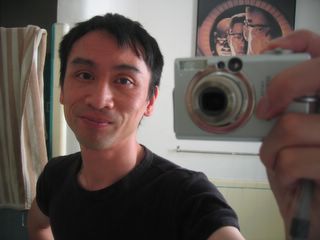
I'm British-born Chinese from Bristol, UK. I’m LA-based. I’m a hip hop aficionado. After 15 years in London I moved to LA to pursue a new career and outlook on life.

Back in the 80s I was a DJ. In the 90s I contributed to the world's first street style exhibition at London's Victoria & Albert Museum. In 2011, I had my first interviews published. Today, I’m keeping busy with music, art, photos and writing.

Saturday, October 12, 2013

#UNleashed Magazine: "The Past According to Futura" #ArtInTheStreets #Futura

This is the last of four articles I wrote for UNLeashed Magazine in 2011 to celebrate the "Art in the Streets" exhibition at LA's Geffen Contemporary at MOCA (Museum of Contemporary Art.) Reviewing my interview with Futura over two years later I am still in awe of insights he shared with me and the context he gave to the fragments of hip hop history I have experienced since I fell in love with the culture in 1982-83.

My other three UNLeashed Magazine articles can be found here: the beginnings of street art (Patti Astor and Fab 5 Freddy;) the appearance of branded street art (Tats Cru and Scion;) and the business aspect within street art (Nick Walker and Lainya Magana.) 

Photo credit: courtesy of Futura

A 30-year career for a graffiti artist is rare. It takes a special breed of talent and the confidence to take your art beyond the train yard, basketball court and gallery to new platforms and levels of creativity to reach broader audiences. Futura [2000] is one of the few artists who has constantly reinvented himself, always looking forward and rarely looking back. UNleashed Magazine spent an evening talking with Leonard McGurr, aka Futura, at his home in Brooklyn, ahead of his participation in the Art in the Streets show opening at The Geffen Contemporary at MOCA (Museum of Contemporary Art) in Los Angeles.

MOCA exhibition entrance (photo credit: Stevio)

Futura’s graffiti career started in 1970 when McGurr invented his tag (a graffiti writer’s nom de plume), to represent himself in the graffiti underworld and disguise himself from the authorities. “Coming up with the name ‘Futura 2000’ – there were a lot of things that I stole that from…The ‘2000’ was my inspiration and the name became something I live by…and I [have] actually survived 30 years…”

In the 70s, what made Futura 2000 stand out wasn’t his catchy sci-fi tag - after all he was preceded by Paul Renner’s 1920s typeface and Lincoln’s concept car of 1955. He stood out because he painted ‘whole cars’ – trains painted from top to bottom – in what became his signature; abstract and emotional blaze of color. His 1980 painted train raised the bar and created a new aesthetic in graffiti art. Futura lays out the milestones in his long career, “1980 I decide to break with tradition and discover the unknown. The abstract wholecar painted over a three-hour period on a cold night in March would ultimately become iconic. Whoa. who knew?”

Futura 2000 whole car 1980 (photo credit: Henry Chalfont and Martha Cooper)

He made the transition to canvas in the 80s and shared a Lower East Side studio with Fab 5 Freddy. This is the period that will be the essence of Futura’s installation at MOCA. “I have a fantastic painting from 1984, [a] kinda large important painting - seven by nine feet. It was a large painting for its time. This particular painting I gave to my wife when she was pregnant…in the summer of ‘84…that’s 26-27 years ago and it’s a great painting to have as a retrospective [of my work]. And I’m gonna match it with another piece that I haven’t even made yet. I’m gonna make it out there [Los Angeles]. It’s not the ‘yin and the yang,’ but the ‘then and the now’.”

Futura paintings 1984 and 2011, Art in the Streets (photo credit: Stevio)

On the importance of the MOCA show, Futura is very clear. “It is great that Jeffrey [Deitch] has done this, because...people [will] want to talk about the history of the movement…[And] being selected as one of the artists [at MOCA] is awesome…this is probably the first real recognition by an American institution…of the entire movement.[Not just] individuals like Basquiat and Haring who had already been recognized.” As an elder in the graffiti world, Futura is philosophical about what the exhibition will do for the street art genre as well as artists’ careers. “I’m not looking at the show [to say] ‘hey I’m in MOCA!’ It’s one aspect of me as a person. It’s not that important! I’m sure to some of these kids this is it! This is like ‘oh, God dude I’m in! I’m gonna cash in on this,’ or whatever the motivation will be. I’m grateful and I will represent myself very well.”

“I think this show will inflate some peoples’ prices and that should be good for them. I’m grateful for MOCA and I’m excited, but I don’t see it as the defining moment in my career. I think it’s a great moment for the movement…but how many people are in the space, literally inside the show? How many kids who didn’t make it in the show are part of the exterior events? [Ask yourself] not who’s in, [but] who’s out!” 

Art in the Streets artist group photo (credit: Stevio)

Futura Past  You have to understand Futura’s past to truly understand his point of view. He got recognition during the first gallery love affair with graffiti art in the 80s. He exhibited in the Tony Shafrazi gallery in 1982 alongside Kenny Scharf, then again in 1984 with a solo show. But he was given the cold shoulder after galleries and collectors turned their backs on graffiti art and moved on to more traditional, highbrow art. In response to that boom and bust era, he looked for other avenues to channel his creativity. He reflected, “I didn’t want to be part of the movement 24/7…I diversified my creativity is how I see it. I did a lot of things with my talent and I wasn’t a one-dimensional player. [Now, with MOCA] the art world has come to me. I’ve tried to avoid it…but here it is.”

Earlier this year, fine art auctioneer house, Bonhams, sold one of Futura’s installation pieces painted live in 1983 while he was on tour with the UK punk rock band, The Clash. The four by eight foot painting sold for just under $60,000. “It’s an awesome price and it’s great for the person who profited from that,” said Futura, “I’m not bitter [or asking] ’where’s my percent[age]?’ I don’t worry about those things or play the numbers game.”

credit: Bonhams

“I’m not a collector of my own work, or for that matter of fact, anyone’s work…there’s only one painting in my apartment [and it’s] of my kids. It’s not like I need to be around my work…if there is some potential business [from MOCA I will look at it], but I will [continue to] be as stingy and cheap with my own work as I’ve ever been. Hey, I don’t even have [any of] it! So it’s hard to come by. Just because there’s going to be a rush on it doesn’t mean I’m going to fill it either…I’m never drawn by that [money], that’s not my motivation.”

Outernational  As with many things, foreign collectors seem to appreciate the graffiti aesthetic more than at home. Collectors of Futura’s work outside of America have been consistently supportive over the years, so why not move abroad like some of his contemporaries? Futura explained how it was in the early 80s, “People like Jon One, Toxic, Quik, didn’t really expatriate until ‘83/’84…First of all, I’m from New York so I’m not going anywhere, although I have been to 70 countries…and I loved it. All the subsequent exhibitions were based on European interest in our work. [It came from] the people in France who bought; the Dutch who bought a lot, as well as the Germans and the Italians. They all supported our art, whereas no one in New York was supporting it, except for the high-end guys – Basquiat, Haring, Scharf. I sold some paintings; no doubt, I had a moment, but no one was buying graffiti art with any consistency. I was never going to leave [New York]; but people left because that’s where the money was.”

Bonjour hip hop  In 1982, Futura visited France for the first time as part of the New York City Rap Tour. This was masterminded by journalist Bernard Zekri who befriended Afrika Bambaataa (founder of Hip Hop’s influential Universal Zulu Nation) and Jean Georgakarako (better known as Jean Karakos) the man behind French new wave record label, Celluloid Records. This period is one of folklore, but it is clear that commercial interests had already infiltrated hip hop. Futura recalls that time, “Prior to the tour, there was a French rush on our movement [hip hop] and it occurred with a few articles that were done with [Fab 5] Freddy, myself and Bambaataa about this new phenomenon…it wasn’t called hip hop yet. The creation of the records [I painted the sleeves] was all part of Jean Karakos’s marketing strategy.”

Talking about his work for Celluloid and the 1982 Celluloid release of his record Escapades of Futura 2000, “I did those covers [for Celluloid] but those records were an exploitation event and I never got a dime, but I know that they cut a deal with The Clash to get their music. That record was meant to happen as a cassette tape and it predates the [New York City] Rap Tour by seven months. So, when I came back to New York I said to Fred [Fab 5 Freddy] ‘Yo, you gotta listen to this little rap record I did…’ It was my homage to graffiti, but I never wanted that to be a fucking record…and Celluloid cut other records (Fab 5 Freddy’s Change the Beat, DST’s Megamix II and Phase II’s The Roxy). All this record shit gets done prior to this tour. Why? Because they have to sell something on the tour. At the time, I was totally manipulated, but I didn’t mind because ‘we were all going to Paris!’”


Fast Forward to the 90s  “1985 the Eighties peak; mid decade... those with skills and talent find new opportunities. those without; are trapped in history. Bummer!” Futura moved on to the next phase in his career. By the 90s, the fate that Futura firmly believes in continued to push his brand of art internationally into other avenues. “…I met James Lavelle from Mo’Wax in Berlin. As a result of meeting James, I met Hardy [Blechman of Maharishi for whom Futura designed a range of clothing]. A few years later, I hooked up with the Tokyo ‘Harajuku’, über-cool set. Things were happening without any plan or forecast. The gates opened up in Japan. Japan wound up being this place that supported me…and gave me opportunities that I’d never seen before in America…I love Japan. And James was my key…as he was always in with those guys.”

Cultural Overload   By 2005, Futura saw the urban culture swelling in popularity. “2005 the MOVEMENT is not just GLOBAL it’s GARGANTUAN.” When asked to elaborate, he added, ”I don’t just mean the art world. It’s the lifestyle and culture…street art, social networking and blogs, in addition to all the consumer culture like Hypebeast and Freshness. No longer do we live in niches; all the circles cross over each other. There’s the community of artists and designers and the ‘cool boy’ stuff. In ’05 it hit a curve, [and became] another movement that was bound to explode – it was too much – and now we’re in this recovery period. I think the movement glutted on itself, it got too high on itself, fed off of itself and it got sick. I’m weary of all that. I can be in it, but when I’m in it, I am never really believing it.”

In April, Futura travels to Los Angeles in preparation for the Art in the Streets show. “I’m looking forward to going to LA just to check out the work on the street, ‘cause I’m sure there’s a ton. I think I’ve seen all there is to see in New York, which is almost depressing.” As the MOCA show shines the spotlight on him once more, like many forefathers of a movement, he’s protective of what he’s pioneered and outspoken about those who follow in his footsteps. Referring to the new wave of street artists, Futura opines, “I take a lot of photos, so I’m aware of the new kids on the block. I don’t mean the bigtimers like Twist, Swoon, Barry McGee or Shepard Fairey. I’m talking more about the people who haven’t made it yet.”

Futura, Art in the Streets 2011 (photo credit: Stevio)

“It kinda makes me angry that artists who are out there today don’t get the historical perspective; they simply jumped on a bandwagon that had gained momentum…happy to jump aboard and reap the benefits; and they don’t care about, or respect the forefathers or pioneers. I claim some stake in the way it has all panned out 30 years later.”

Talking about street art, Futura says, “I like some of it, but I don’t get anything [emotional from it]. It’s very strange.I get that in galleries also.” He continues, “It’s not just technical ability; it’s energy and emotion which I think certain artists [need to] deliver which is beyond even the work. You [need to] get more of a feel for the person, and that’s hard to translate with a lot of street art. It’s very cold, I don’t get a lot of warmth from it…”

Futura, the artist, is multi-faceted and his work has seeped into every aspect of urban culture, but Futura the man is very much centered around his family whom he considers to be his greatest achievement. “I’m proud of my kids –they’re children of the globe, but Brooklyn is at the heart. My wife laid out the plan...If I need technical advice I call my son, if I need the truth I call my daughter…”

So, what’s next for Futura? “I’d still like to make a movie…I’m still young enough to do a lot more interesting things…that’s why I don’t like to reminisce, although this [MOCA] show makes us look back. It’s not what I do…I’m Futura, I’m the guy who’s looking ahead. It’s no disrespect…I’ve always been that guy.”

Art Of Facts (Feat. FUTURA) from 13thWitness™ on Vimeo.

by Stephen Pang (re-published with permission from UNleashed Magazine)

Copyright 2011 by Stephen Pang/UNleashed Magazine.


Labels: , , , , , , , , , , , , ,

Sunday, September 15, 2013

#UNleashed Magazine: "Branded Street Art" #ArtInTheStreets


2011 brought a seminal museum art show to Los Angeles. "Art in the Streets" promised an encore in New York's Brooklyn Museum, but quickly lost support and was cancelled.

I was fortunate enough to be chosen as art curator for a style magazine, called "Unleashed." Over a period of a few weeks in 2011 I wrote four articles based on interviews with the street art movement's finest - Fab 5 Freddy, Futura, Nick Walker and Patti Astor.

In the past, I've published two of the stories here on my blog: a history of street art and the business interests in street art. Now I've decided to publish the remaining two articles from my interview with Tats Cru's BG183. Let me know what you think in the comments.


"Branded Street Art" by Stephen Pang
(permission to republish kindly granted by UNleashed Magazine.)

Banksy, Shepard Fairey, Keith Haring. Each of these artists developed their own distinctive, identifable art style that turned every mural into an explicit branding exercise that the marketing textbooks describe as “the process of creating and disseminating the brand name.

”These brand messages, although not commercially motivated, are used to convey a thought or idea to anyone willing to stop and look. Unlike art in museums or galleries, these images have a direct impact because they surround us as we go about our daily lives – like ambient art. Street art appeals to an influential, but elusive, demographic. Brands want to co-opt and harness this energy and authenticity that street art brings with it. Each time a brand connects itself to street art, it ironically, dilutes its value as a channel of communication.

To learn more about branded street art, UNleashed spoke with two leading players from each side of the fence. For the artists, TATS Cru of New York, a prolifc “illegal” graffiti crew from the '80s that transformed itself into a pioneer of graffiti advertising murals. And, to represent the corporate brands, UNleashed reached out to Scion, Toyota Motors’ diffusion car marque.

UN: TATS Cru is recognized as the graffiti mural kings and paints every year at the Graffiti Hall of Fame in Spanish Harlem. When did TATS Cru formalize itself as a mural company, rather than a graffiti ‘bombing’ crew?
BG183 (TATS Cru member): When me, Bio and Nicer started the [mural] business, we landed a Cola-Cola contract. That was through Chico from the Lower East Side. He was also painting advertising a year or two before us. He had Camel cigarettes and Cola-Cola. But, he couldn’t paint in the Bronx because we [TATS Cru] had that territory. We were already doing memorial walls and mom and pop stores...

Coca-Cola by Tats Cru, 1997 (not the first Coke mural)

UN: How did working with brands affect TATS Cru’s approach to mural painting?
BG183: At the time, we didn’t know whether we were a sign company, an advertising company or artists-for hire. We took every [commission] that came in. During that time, a lot of companies were doing graffiti advertising, but real people who grew up with graffiti knew it was fake. So, why not hire a company like us [TATS] to create a win/win situation? We were basically in advertising - a sign company. But we didn’t know that…we thought we were bringing the graff’. When we got down with Coke it opened our eyes. We needed to think like them. People are still buying Coca-Cola to this day, so there has to be a reason. In 1996, a year or two after the Coca-Cola deal, we got [a contract from] ABC Carpet and Home, one of the biggest carpet stores on the east-side. Even though we were working for Coke we were still broke…we didn’t know how to price the work…we thought $1,000 was a good price.

UN: Why was graffiti popular with advertisers during the mid-90s?
BG183: Companies couldn’t put up billboards because they were getting defaced by vandalism and graffiti. So,the way for advertisers to come into our neighborhoods…we had a gimmick. If you used us to make them [adverts], they didn’t get defaced. In the early '80s, TATS Cru had 12 members who fought with other graffiti artists and stole their paint. We had the reputation that whoever messed around with us would get beaten up. So, no one would touch our work, including our advertising work…so we could guarantee our work. Although, I remember we painted eight adverts for Hummer. The two in Brooklyn, in the Williamsburg section were defaced by activists – they wrote ‘Bush, Gas, Oil.’ It wasn’t an anti-graffiti thing, it was because…a Hummer is a gas guzzler! They destroyed it, we fixed it, and they destroyed it!

Tats Cru x New York Mayor Bloomberg, 2010

UN: How did TATS Cru become the self-titled ‘mural kings?’
BG183: [The advertising murals] became a performance piece. As we painted, people would ask ‘Wow, how did you guys paint that logo?’ At the same time it gave us a lot of skills in the graffiti game…not many can imitate the work we do…there are only a few in the world.


UN: In the '80s there was the downtown graffiti art scene that Fab 5 Freddy, Dondi, Futura were part of. Where was TATS Cru in that mix?
BG183: Those guys started in the early '70s, but we started in the '80s. They were already in the graffiti game for seven or eight years and people like Crash and Phase were painting canvases. Our mission was writing our name for fame, painting subways, getting chased by the police. Our focus wasn’t painting in galleries, but we did go to some galleries back in the Bronx, like Fashion Moda. We were 16, 17 years old and had no fame, no props. These guys already had books published, [like Subway Art with Henry Chalfant and Martha Cooper.]

Toyota Motor Sales USA Inc. launched the Scion brand in 2003 as a more youthful, entry-level car - the median age of a Scion driver is 30 - the youngest in the auto industry, with a whopping 72 percent of those owners being Toyota virgins! Scion has consciously avoided expensive, mass-market advertising, preferring to build favor and credibility using grassroots marketing, including employing the appeal of street art. To understand how Scion integrates street art into its successful marketing strategy, UNleashed spoke with Jeri Yoshizu, Scion’s sales promotions manager in charge of lifestyle and social media marketing.

Scion by Tats Cru

UN: Scion refers to street art as urban art. Is there a difference, and if so, what? Do you distinguish between street artists' media (graffiti/aerosol, wheat paste, stencils etc?) Does it matter?”
Jeri Yoshizu: We call it street art to not limit it to graffiti. It encompasses the large category that includes stenciling, etc.

UN: How and when did Scion decide to build street art into its marketing strategy? How did the Scion Installation idea develop, and did the initiative change direction during planning and execution?
Jeri Yoshizu: We built it into the launch of the brand in 2003. It started as a simple exhibition at The Los Angeles Auto Show. We had more than 20 artists painting on the Scion XB. It included David Choe, Kenton Parker, Saber, Mister Cartoon, Revok, Krush, Dez Einswell and others. It was very successful and also initialized relationships with artists that we have continued to work with for years.


UN: What is the appeal of street art for Scion? How does Scion balance the possible illegality of street art with its own brand values?
Jeri Yoshizu: We focus on the positive aspects of art, and not only street art. We work in video, graphics, mixed media, etc. The appeal is based on the types of artists who are making a life through art. We are not working with highbrow artists, as that is not our target market's interest.

UN: How did Scion shortlist the artists chosen to participate out of the hundreds of notable artists?
Jeri Yoshizu: [Requiring artists to be] positive and open-minded tends to shorten the list. We work with people who want to make something happen.

UN: What do you think Scion brought to the street artists who participated in the initiative? What do you think Scion gained from the collaboration with street artists?
Jeri Yoshizu: We gave them a paycheck. They have to pay their rent. Eat. Have a life. Scion's job is to make sure that they feel good about working with a corporation, without feeling taken advantage of. This is key to our initiatives. We know we are a corporation selling cars. I want to dispel any negative outcomes that can typically result by supporting the artists and helping them to develop in the commercial area. Our gain is great relationships while watching their careers grow.

UN: What are the marketing objectives? How effective has street art been for Scion's marketing objectives? How does Scion track and measure effectiveness?
Jeri Yoshizu: Street art, and executing the Scion initiatives consistently, has brought brand recognition and apositive reputation for the brand. I measure success through feedback from the artists.

UN: What's next for Scion and street art?
Jeri Yoshizu: Video.

Copyright 2011 by Stephen Pang/UNleashed Magazine.

Labels: , , , , , , , , , , , , ,

Tuesday, May 31, 2011

Kenny Scharf: More, Newer, Better, Nower, Funner! #ArtInTheStreets

Last week at the premiere of "Outside In: Art in the Streets" the Kenny Scharf short film "More, Newer, Better, Nower, Funner!" was presented.

The film's title means a little more when you recognize that Kenny Scharf was the inventor of the name that stuck with Patti Astor's Fun Gallery! If you want to see Scharf's butt watch this film ;)

Labels: , , , ,

Tuesday, May 24, 2011

Levi's presents: OUTSIDE IN: The Story of Art in the Streets #ArtInTheStreets


Tonight is the premiere of Alex Stapleton's film, "Outside In: The Story of Art in the Streets," at The Egyptian Theater in Hollywood. As it says on the can, this Levi's-funded film gets behind the curtain and shows us the making of "Art in the Streets," the first major graffiti and street art exhibition supported by a museum. 

RSVPs for the film have closed, but a little birdy tells me the film will be showing at your favorite urban film festival soon. And you can still see the show at the Museum of Contemporary Art in Los Angeles, currently in its second month. 

Danielle Hinde and Alex Stapleton

If you want exclusive and unique footage and interviews of the artists featured in Art in the Streets look no further than this film. "The film features exclusive interviews with show artists sharing their artistic process, pitfalls with the law and poetic impermanence of their craft." 

If you've ever wanted to know who the artists behind the art are, here's your chance: Martha Cooper, Lee Quiñones, Fab 5 Freddy, Shepard Fairey, Banksy, Mode2, EINE, Risk, Revok, Mr. Cartoon, ESPO, Henry Chalfant, Gusmano Cesaretti, Chaz Bojorquez, C.R. Stecyk III, Futura, Retna, Ed Templeton, Swoon, Neck Face, Geoff McFetridge, Aaron Rose, Jeffrey Deitch, Barry McGee, Os Gemeos, Kenny Scharf, Spike Jonze

The Levi's Film Workshop will host a Q&A with director Alex Stapleton and an after-party with a DJ set by artist Shepard Fairey. But remember, leave your fat caps and markers at home! ;)

Chaz Bojorquez @ MOCA, credit: Alex Stapleton

Labels: , , , , , , ,

Thursday, May 12, 2011

#UNleashed Magazine: "The Business of Street Art" #ArtInTheStreets


The Business of Art by Stephen Pang
(permission to republish kindly granted by UNleashed Magazine)

Space Girl and Bird, Banksy
Street art has its fans and detractors, but both were united in their amazement in 2007 when Bonhams, the British auction house, sold lot #299, an aerosol stencil painting on steel, for US$576,000. Of course, this was no ordinary street artist. This was Banksy and the painting was ‘Space Girl and Bird,’ commissioned by the UK pop group, Blur. Despite these credentials the estimated guide price was still 20 times less than the final hammer price.

This zealous bidding from an anonymous American buyer marked the beginning of the latest street art feeding frenzy. A few months later, Bonhams followed up this record-breaking event with ‘the world’s first street art auction’ featuring 100 works from both American street artists (Keith Haring, Faile, Shepard Fairey) and the Brits (Banksy, D*Face, Eine). But, how do works of your favorite street artists end up on the auction block and is it inevitable when art is treated like a commodity to be bought and sold for profit?

UNleashed Magazine spoke with people in the know, Lainya Magana, art curator, writer and principal at San Francisco-based art PR agency, A&O, and Nick Walker, one of the first wave of stencil artists benefiting from the interest in street art and whose work featured in the Bonhams auction in 2008.

Left to right: Lainya Magana, A&O PR; Nick Walker mural 2008

The art world as seen by the public is civilized, orderly and slightly intimidating. On the surface it’s made up of art galleries and auction houses that specialize in art. But, that’s the tip of the iceberg. In the background there’s a complex ecosystem of art consultants, advisors and agents. And they are all paid to create value for their clients, either buying or selling art. “The artist/gallery relationship is about money. The problem is that some artists don’t look at themselves as a business or a brand,” said Magana. “There are good galleries and bad ones…artists need to be very selective as they need to think about longevity of career.”

Nick Walker recognizes the importance of the role a gallery plays in forging his career, “I think it’s important to have a good gallery represent you, especially if they are well positioned and respected. It’s also integral that the gallery keeps an artist’s integrity intact and is not short sighted with an artist’s career. It takes a while to find the right gallery. You could go alone, but selling becomes a distraction and it’s important to place paintings with the right collectors.”

"The Day After" series launch @ Opera gallery, New York 2011

And he should know. Today, Nick Walker is a world-class stencil artist, but he started his career in 1983 graffiti ‘bombing’ the streets of Bristol. “In the early days I used to paint graffiti under the name Ego and I had a t-shirt label called Magic Pudding Avenue from the beginning of the 90s. I would’ve liked to have kept it going, but I wanted to concentrate on painting a lot more than chasing up stores for the money on t-shirt sales.”

The turning point for Walker’s career came in February 2008 when his Los Angeles solo show at Carmichael Gallery sold out. Within days, across the Atlantic in London two of Walker’s works fetched more than five Keith Haring paintings combined at Bonhams’ first ‘urban art’ auction.

Speaking on his experience of the art market Walker said, “When a painting comes to market you’re in the hands of others and it’s just having confidence in the auction house and the knowledge that they are branded and have a good clientele.” He continued, “The nightmare scenario is when a piece goes to a Johnny-come-lately auction house who displays art [in a fashion] not that dissimilar to a car boot sale and doesn’t give a shit about an artist’s career.’ He gave an example, “After the Bonhams result another auction house in the UK jumped on the band wagon and consigned 14 pieces of my work for the same auction. Talk about being made to feel vulnerable. The whole thing’s a double-edged sword.”

A&O’s Magana explains the favorable and unfavorable consequences that Walker refers to, “Sotheby's and Bonhams are major businesses that thrive on the secondary art market. It's inevitable. Collectors will eventually tire of work, or need to make a quick buck, and want to sell their work. And why shouldn't they? And why shouldn't someone else have a chance at purchasing that work on the secondary market? But it's not always so innocent. The secondary art market is also where art is made into a commodity, traded and inflated to a gargantuan level. The market is dictated by those collectors who live at the top tier of wealth and power and unfortunately an artist's value is seen through the lens of commodity and commerce.”

Now that Walker is established and has a following he is focused on his brand and taking some more control of his business affairs. “I was never brand orientated…I hadn’t read up enough on other artists. It’s only over the past two years that I’ve been focusing more on this…It’s more important now to focus on branding because I have established a large group of loyal collectors. I need to keep the machine running and coming up with fresh ideas to produce.”

The Morning After series, Nick Walker

Today, to satisfy demand from his collectors he balances working with galleries and selling his art directly, “…I like to keep the sales of original works through the gallery, but I prefer to have control of my print editions. In the past I’ve released a few of ‘The Morning After’ prints through a gallery where they deal with the production side and admin for a percentage [of the profits], but I’m now releasing the rest of the series myself. I’m building a bigger team to work on projects etc. and dealing with the whole production.” Control is a theme that comes up a few times when talking with Walker. This is because, despite success elevating his career, he feels he’s been held back by others in the past. “My Mona Simpson print sold out at [Banksy-affiliated] Pictures on Walls, but that was all they wanted to print of mine. I offered them ‘The Morning After’ series, but Banksy wasn’t interested in promoting these as he said it was too like something he would do. I disagreed, but Black Rat Press was really keen to work with me, so it felt like the perfect time to move on.”

The Morning After series, Nick Walker

And with the Internet there’s no reason why an artist doesn’t take more control of their work. Magana calls this use of technology ‘Gallery 2.0’. She explains, “The 21st Century artist wants to use Facebook, they want to use Twitter and build their own community…do their own sales… it’s totally possible now.” As ex-gallery director for Upper Playground’s Fifty24SF and NOMA Gallery, Magana has some seasoned advice for artists looking to develop their career through galleries, “Weigh every decision against whether it will provide you with longevity of career. No matter how tempting, don't go for quick sales and don't raise your prices too rapidly. Research the galleries you want to show in and create a business strategy with 6 month, 1 year and 5 year goals.

“And remember, as Andy Warhol said, ‘Making money is art and working is art and big business is the best art’.”

Copyright 2011 by Stephen Pang/UNleashed Magazine.

Labels: , , , , , ,

Thursday, May 05, 2011

Zephyr's "Wild Style" title sequence #ArtInTheStreets

To fans of hip hop, "Wild Style" is the ultimate embodiment of the culture: MCing, DJing, b-boying, graffiti-spraying!

The title sequence of the film is one of the most memorable and creative of any hip hop film and the animation celluloids are on display at MOCA as part of Charlie Ahearn's room at the "Art in the Streets" exhibition.


The Art of the Title Sequence website does does what it says ;) And it brings us a great interview with the Wild Style title sequence creator, graffiti legend Zephyr (aka Zroc in the film.)


Excerpt of the interview. Read the whole shabang here.
Art of the Title: Were you involved with animation previously?
Zephyr: No. The “Wild Style” animation project was my introduction, although I used to make flip books.

ATS: How did you develop and mix the various artistic styles (the “Wild Style” morphing, “Rap,” "Break,” “Pop”)?
Z: Charlie Ahearn was a great director. He had very specific ideas about everything in the film, and was closely involved in developing the aesthetic of the art in the opening sequence. The graffiti styles used for the words “Rap”, “Break” and “Pop” were all variations of things I was doing on walls and trains at the time. There is a generic quality to my graffiti, but there is also something very distinct about my graffiti work. Maybe that sounds like a contradiction, but graffiti writers will always recognize my stuff immediately. I would say that the different lettering forms were guided by Charlie, but they are definitely “Zephyr-style”. It’s weird to be talking about this now. It seems like a million years ago…

Original "Wild Style" (amphitheater scene party) flyer 1982


ATS: At what point was the sequence created? The star at the end of the sequence is an interesting example of the iconography of the film.
Z: The live footage already existed, so we modeled the animation to dissolve smoothly into the live footage.

ATS: How did you mold the visuals to the music?
Z: Joey Ahlbum created a beat chart according to the soundtrack, and we worked from that.

ATS: How were you able to represent the styles of your peers and friends so well?
Z: I assume you’re referring to the train rolling by. That was easy. Copying other writers’ stuff comes pretty naturally to me, although writers will always execute their own signatures better than someone else will, of course. The train was cardboard, and it rolls by very quickly. If you saw it “frozen” you would see that I probably didn’t really do them justice. I think I did a “Bus” piece that was just plain lousy.

ATS: How did the idea of animating the graffiti come about? Are there other examples of this from this era?
Z: Charlie Ahearn had a vision. He wanted to bring “black book” drawings to life. He urged authenticity and rawness. He didn’t want it polished up. And no, this had never been done before.

ATS: What was it like collaborating with director Charlie Ahearn?
Z: It was fantastic. And I will forever be grateful to Charlie. I was a 19 year-old degenerate when Charlie approached me to work on the art for the movie. His faith in me helped me take myself a lot more seriously, as an artist and a person. I will always remember him as one of the people, early on, who recognized that I wanted to be accepted as an artist and not remain a perpetually stoned graffiti writer. Although being a perpetually stoned graffiti writer was definitely fun for a while!

ATS: How did this movie effect your life and graffiti writing career?
Z: It felt good to be working somewhere without barbed wire and cops. But I kept writing graffiti. Charlie Ahearn even came to the train yard with me twice.

ATS: How have you dealt with personal vs. commercial work, especially considering the roots and history of the medium?
Z: In the 1980’s I did a lot of commercial work. Now I refuse 99% of the offers I get, particularly the corporate ones. Graffiti has become so commercially co-opted it’s sickening. If making it that way is partly my doing, I'm embarrassed. That’s not the legacy I wanted.

ATS: What fueled the youth to bridge graffiti with the other dominant youth cultures of MCing, turntabalism and breaking? Why was the form primarily driven by the youth?
Z: Answering that properly would require about six pages. If you ever come to one of my college lectures, you may hear me discuss that subject since college kids get boners when you mention “hip-hop”. But let’s just say that the “organic/south bronx” hip-hop “elements” theory is a good story, kind of like Santa Claus.

Graffiti existed for a decade before “hip-hop” as we know it emerged. This is not the first case of art forms sweeping up and creating associations with other, pre-existing art forms. Graffiti was “anointed” the visual counterpart for rapping, breaking, etc. Most people simply accept that association, but many do not. Some graffiti artists (Blade and Pink, for example) reject the idea that graffiti is part of the hip-hop movement.

Portia and Blade, MOCA 2011

ATS: Did the old concept of graffiti-as-vandalism die? How is the perception different today for the people and those in the employ of the people?
Z: If a real outlaw gets a paid gig, then you have an authentic thing, but the silverware will get stolen. If someone who can draw cute graffiti on paper (or via computer) gets the gig, you have a happy art director.

Labels: , , , , , , , , , ,

Wednesday, May 04, 2011

Happy birthday Keith (#Haring)

Today is Keith Haring's birthday. The Keith Haring Foundation sent me an invite to save 10% by going shopping :)


Little tidbit, Haring set up his foundation after he was diagnosed with HIV/AIDS to promote awareness of the disease and create programs for kids.

Art in the Streets When I was interviewing Futura for UNleashed Magazine special on MOCA's major street art exhibition he told me how Keith Haring put his artwork into his Foundation as gifts for the kids of his New York City artist friends! This never made it into the final article, but you can read the rest of the interview here.

Labels: , , , , , , , ,

Friday, April 29, 2011

"Blurring the Lines" old skool #graffiti show...LA

It seems that 40,000 sq feet of street art isnt enough for Roger Gastman, co-curator of the MOCA "Art in the Streets" exhibition currently open in Los Angeles. He's spread its wings and curated an overspill show in Culver City in a more modest space.


Saturday night, Corey Helford Gallery opens its “Blurring the Lines" exhibition. This is the gallery’s first exhibition of "graffiti art masters." With so many already represented in DTLA it must've been hard to chose just three legendary artists. The lucky trio are CRASH (NYC,) FREEDOM (NYC) and RISK (LA.)

"'Blurring the Lines' is a dynamic intersection of legendary East and West coast writers, where the lines that divide urban art and the new contemporary fine art world converge." Corey Helford Gallery

The public reception for “Blurring the Lines” will take place on Saturday, April 30 from 7 to 10pm, and the show will be on view until May 18, 2011.

Read more about the artists below - information from Corey Helford Gallery's press release.

"Renowned New York graffiti artists CRASH and FREEDOM will take over the main floor with recent works inspired by their iconic imagery that was shown along alongside art luminaries Jean-Michel Basquiat, FUTURA, and Keith Haring during the 80s. A master at subway art, CRASH was also one in a handful of New York writers who painted murals on the streets during the early 80s while exhibiting at prestigious galleries worldwide. At the same time, FREEDOM moved into a larger space in Manhattan, an abandoned two mile stretch of tunnel designed by Robert Moses that would become the legendary Freedom Tunnel, launching a sixteen-year run of world-famous paintings and drawings.
For his first major gallery exhibition in almost twenty years, FREEDOM notes, “While CRASH and I have worked together over the years, this will be our first gallery exhibition together since 1987, which is exciting.” Upstairs in the loft, famed Los Angeles graffiti artist RISK, whose bus installation is prominently featured outside of “Art in the Streets” at The Geffen Contemporary at MoCA, will unveil “Styles for Miles”. Created on canvases constructed from vintage license plates, RISK’s new works represent his graffiti career as whole, tying together elements from his origins writing on freeway overpasses to his commercial projects and gallery and museum exhibitions." Corey Helford Gallery


Artists' biographies
  
Chris Pape / FREEDOM
Born in 1960, Chris Pape began painting trains as a teenager in New York, and in 1979, he adopted his worldfamous moniker FREEDOM. Pape began exhibiting in galleries in the early 80s showing with CRASH, Jean Michel Basquiat, FUTURA and others. In 1989, with the emergence of the “Mole People”, he chose to abandon his gallery career and focus on painting and drawing the homeless known as the Freedom Tunnel series. In 1996 the tunnel was closed off and the artist painted his final work titled “Buy American”. Considered by many to be the leading archivist of the New York subway graffiti movement, Pape reemerged as an author and filmmaker, continuing to paint commissions based on the eclectic works in the Freedom Tunnel for collectors worldwide.

John Matos / CRASH
Growing up in the Bronx, John Matos began his career at the early age of 13. He was first noticed through his murals on subway cars and dilapidated buildings. As he got older, he transferred his art from the street to canvases and has exhibited his work in museums worldwide. In 1996 Matos painted a signature Stratocaster for musician Eric Clapton and gave it to the artist as a gift. Clapton used this guitar throughout his 2001 tour. In total Matos has created five guitars for Clapton and was commissioned by Fender Musical Instruments for 50 guitars he titled the “Crashocasters.” Today Matos is not only recognized as a fine artist, he is also regarded as a pioneer of the graffiti movement. Matos’ work is included in the collections of Museum of Modern Art, New York, Stedelijk Museum, Amsterdam, Brooklyn Museum of Art, Brooklyn as well as private collections worldwide. For more information about the artist, please visit crashone.com.

Kelly Graval / RISK
In a career spanning 29 years, RISK has impacted the evolution of graffiti as an art form in Los Angeles and worldwide. RISK gained major notoriety for his unique style and pushed the limits of graffiti further than any writer in L.A. had before: He was one of the first writers in Southern California to paint freight trains, and he pioneered writing on “heavens,” or freeway overpasses. At the peak of his career he took graffiti from the streets and into the gallery with the launch of the Third Rail series of art shows, and later parlayed the name into the first authentic line of graffiti inspired clothing. RISK has continued to work on numerous Hollywood projects for movie and music video sets, including the film Bill and Ted’s Excellent Adventure and videos for The Red Hot Chili Peppers, Ice Cube, Bad Religion and Michael Jackson. Today, RISK is still involved with graffiti, surrounding himself with writers and supporting them in their art, and exhibiting at galleries and museums worldwide. For more information about the artist, please visit riskrock.com.

Labels: , , , , , , , ,

Thursday, April 28, 2011

Controversy continues to follow MOCA's "Art in the streets" #ArtInTheStreets

Even before the "Art in the Streets" exhibition opened its doors at The Geffen Contemporary at MOCA it was surrounded by controversy.

First, it was MOCA's self-censorship of Italian artist Blu's work. Was it truly an proactive act of sensitivity towards the museum's war veteran neighbors? Was it a publicity stunt by Deitch? Whatever it was, we were all talking about what happened.

Blu mural which was replaced with the painting below (credit: Unurth)

The media debate has since moved on to ask, "what does the 'Art In the Streets' show promote to the hordes of visitors and street artists visiting downtown Los Angeles?" According to the LAPD, the show is telling graffiti artists it's open season in the Little Tokyo neighborhood where MOCA is located. "Over the last two days, dozens of tags, including monikers and larger so-called bombs have blighted several commercial buildings behind 1st Street as well dumpsters and light poles within a stone's throw of the museum entrance."

Now, I write this as a ardent follower of hip hop and graffiti art. Despite the over-powering act of self-censorship mentioned above, it seems very little has been done to manage the possible increase of street artists attempting to make their mark in the neighborhood, encouraged (or provoked) by the amazing exhibition MOCA has organized.

So far, during my visits to MOCA I haven't seen one official notice on MOCA property - inside or outside - expressing a concern for neighbors' property in the hope of curtailing the high spirits of street artists as they enter or leave MOCA. It would be a small step in the right direction. Instead, the media are regurgitating what the police are reporting.

DO NOT BOMB IT notice at the screening of "Bomb It"

Coming down hard This past weekend's arrest (and incarceration) of Revok, one of the graffiti artists featured in the MOCA show (and French artist Space Invader's arrest the previous week) highlights a major challenge for MOCA which cannot be ignored. Street art in its rawest form is vandalism. The law is clear about its stance on that and has been making itself heard by these two high profile arrests. Whether the illegal acts are also public art is never part of the debate. The LAPD are law enforcement, not art critics.

To MOCA I'm a major fan and follower of graffiti and street art since the 80s, but this New York Times article does the culture and MOCA no favors. It's a major P.R. issue that needs managing. And this debacle should've been foreseen. Presenting graffiti in a historical context (Cornbread and Taki 183) shows its illegal past, but to have the New York graffiti wall (below) stereotypes graffiti as mindless individuals "getting up" at the public's expense. Those throw-ups and tags are definitely graffiti, but I doubt it's considered art by the majority of your members and visitors.

If the show is "Art in the Streets" then let's see more Lee Quinones, Mr. Cartoon, Mode 2 who elevate graffiti to an art form and are all recognized for their contribution to legitimacy debate. MOCA had the opportunity to not only present street art in a historical context, but also create a dialog with critics to show how graffiti can be equal, if not better, than other more accepted genres. Sadly, MOCA somehow missed this small window to build a bridge between the artists and their critics.

New York graffiti corner, MOCA
  
And to the street artists, as Saber tweeted on April 21st, "To the artists and supporters of . The authorities have us all under a microscope. DONT BE STUPID! @ "

Labels: , , , , , , , , , , ,

Tuesday, April 19, 2011

#Cinefamily represents #ArtInTheStreets

This evening, Cinefamily in the Fairfax district of Los Angeles presents "Downtown '81," starring Jean Michel Basquiat and made in around the same year. Hope you can make it.

Last Friday, Cinefamily and Levi's hosted the first of a series of films to celebrate the "Art in the Streets" major exhibition of graffiti and street art presented by Los Angeles' MOCA.

The inaugural film had to be Charlie Ahearn's "Wild Style." There's not much to say about this film that hasn't already be said. Just enjoy these video clips from the evening's extra curricular activities.


"The Cinefamily is an organization of movie lovers devoted to finding and presenting interesting and unusual programs of exceptional, distinctive, weird and wonderful films. The Cinefamily’s goal is to foster a spirit of community and a sense of discovery, while reinvigorating the movie-going experience. Like campfires, sporting events and church services, we believe that movies work best as social experiences. They are more meaningful, funnier and scarier when shared with others. Our home is the Silent Movie Theatre, one of Hollywood’s most beloved and beautiful cultural landmarks. There, The Cinefamily will provide a destination spot for Los Angelenos and others to rediscover the pleasures of cinema.

Built in 1942 by John and Dorothy Hampton, The Silent Movie Theatre ran for decades as the only fully functioning silent movie theatre in the country. It has been fully restored to its original, vintage 1940s art deco design, along with a brand new screen and sound system, to help a new generation enjoy the pleasures of cinema in a beautiful theater." Cinefamily website

Labels: , , , , , , , , ,

Sunday, April 17, 2011

#UNleashed Magazine: "Before Art was Street" #ArtInTheStreets


"Before Art was Street" 
by Stephen Pang (re-published with permission from UNleashed Magazine)

 If you Google ‘street art’ you will find no end of references. On Amazon alone there are over 4,000 books to choose from or you could drown in over 45 million Google search results. But, despite its visibility, street art is a relatively new art phenomenon with no formal training or career path. How quickly street art has been absorbed into pop culture and recognized by art galleries and institutions is a testament to its visual potency and the 'Art in the Streets' exhibition at Los Angeles’ Geffen Contemporary at MOCA (Museum of Contemporary Art) is the latest endorsement of this prolific art form.


But where did this genre of art come from? The term ‘street art’ was, arguably, first coined in the late 70s and used to create a catch-all ‘super category’ for art whose only commonality was that it was displayed in public spaces, rather than behind the closed doors of the traditional art galleries. Public art, in itself, wasn’t new. What was new was the acceptance of street art by galleries, auction houses and museums.

In the late 70s, before Banksy, JR or Shepard Fairey, there was no street art, only aerosol graffiti. And it was a blight of the inner city, no more so than in its Mecca, New York City. To the establishment, the words ‘graffiti’ and ‘art’ were rarely uttered in the same breath. However, something changed in the early 80s. Out of that illegal graffiti scene emerged a few graffiti artists were breaking away from painting subway trains and exploring other venues for their art and trying to penetrate the established art gallery world in Manhattan. This is the period when uptown New York hustle met downtown Manhattan avant garde and two people who were instrumental in creating this cultural cocktail and channeling its energy were the graffiti artist, Fred Braithwaite, aka Fab 5 Freddy, and East Village queen, Patti Astor.


At the time, both were pursuing their artistic goals in different circles, but their entrepreneurial spirit and ability to make things happen united them. In 1981, at a screening of Patti’s punk rock art house film, ‘Underground U.S.A.’, Fab 5 Freddy introduced himself to Patti. Little did they know that this chance encounter would lead to the beginning of the Fun Gallery, the world’s most influential street art exhibition space, and be pivotal in developing the careers of so many of the world’s most renowned street artists.

At the time, Fab 5 Freddy was making conscious moves to infiltrate the art gallery world and transform his graffiti background into a career. “In the beginnings in the ‘80s I was not trying to offer myself as a graffiti artist because I didn’t see myself doing illegal graffiti when I was trying to make works on canvas. I wanted to be an artist and be in that space and it was something I initiated on my own and after I connected with Lee Quinones [of Wild Style fame] we had a big show in Rome in 1979 [at Claudio Bruni’s gallery].

“This is how I ended up on the downtown scene and meeting other art people (Keith Haring, Jean-Michel Basquiat and Kenny Scharf) that became good friends of mine before the Fun Gallery…and we thought [the East Village] is a place where we could come together and make things happen.”

What Fab 5 Freddy and his peers had unknowingly created was the original social network. Instead of college students, this network was made up of a ‘new pocket of energy’ of fresh, passionate artists who were just coming onto the scene and were now rubbing shoulders with the likes of Patti Astor who was already well known on the East Village scene through her underground films. “Our scene, at that time, was a lot more cliquish…it was really, really a small scene…and you hung with each other and we didn’t venture too far outside our realm. In the areas of the East Village and the Lower East Side is where you would really do well.”

Patti Astor explains how unique the East Village was in the ‘70s and ‘80s and how it constantly reinvented itself and never stood still, “…there were three separate eras to the East Village culture. When I got there [in 1975] the big thing was going to [the club] CBGBs to see the local bands Blondie, Talking Heads, Television and Ramones. The next thing was the film-making and Mudd Club era – I made my first film, ‘Underground U.S.A.’, in 1976 - and that period carried on through to 1981…when the art thing happened.”

At this time, the East Village scene was very white and hip hop had not yet percolated from the uptown neighborhoods into Manhattan. Patti explains, “You have to give Fred [Braithwaite] credit as the main ambassador for hip hop to get out of the South Bronx and out to the rest of the world... It seems unbelievable now, but at that time no one downtown had heard about rap music, breakdancing or graffiti art….” However, the passion and creativity was instantly recognizable and Patti identified with hip hop. “It was pretty easy to get, what we did have in common was we don’t have any money so we’re going to create what we can out of what we have. There’s not much difference [between] making a $500 [budget] jungle romance super-eight movie and hooking up your turntables to a street light in the Bronx.”

Fun Gallery sign recreated for MOCA (credit: Stevio)

It was this shared do-it-yourself mentality that fueled the ‘accidental beginnings’ of the Fun Gallery. After Patti had befriended Fab 5 Freddy in ‘81 she met the graffiti artist Futura who shared a studio with Fab and Lee in Alphabet City, one of the most dangerous neighborhoods in Manhattan at that time. Futura offered Patti one of his paintings, but she decided against accepting it and instead asked Futura to paint a mural in her East Village living room since that would be a proper gift and couldn’t be bought or sold. This mural painting turned into a one-day art event with Kenny Scharf joining the party to customize the apartment’s appliances as Patti made potato salad for guests. This display of bleeding edge street art wasn’t a formal curation or collaboration of street art styles – it was just friends getting together and creating something out of nothing.

Futura c. 1983 (credit: Bonhams)


This was the first of many occasions that Patti attracted the attention of the art world. Patti recalls the day, “The big shocker at this particular event was as we looked out of my living room window at the bums sat on garbage cans we see Jeffrey Deitch (art buyer and now director of MOCA in Los Angeles) and James Curtis, better known as Diego Cortez (curator, art critic and MVP of the downtown scene), step out of a cab and that’s how I met Jeffrey [Dietch.]”

After the first show, Patti Astor wanted a more dedicated venue and she heard about a small 8 foot by 25 foot space on East 11th Street from her friend Bill Stelling, who became her partner in the Fun Gallery. This new gallery had no name at the time of the first show (by artist Steven Kramer) in August 1981. In true democratic style Patti said that each artist could choose the name of the gallery for their show. It wasn’t until the second show that Kenny Scharf came up with the name that would live on forever…the ‘Fun Gallery’.

However, the Fun Gallery wasn’t the only game in town in the early ‘80s. The city was embracing other spaces which were less white and exclusive and more inclusive of the surrounding communities. Speaking about Fashion Moda in the Bronx and ABC No Rio in the Lower East Side, Fab 5 Freddy explains, “Just think about [them] as alternative spaces which were opened up by some radical artists and activists…they were trying to set up an alternative to the established art world that was doing boring, lame stuff.”

Art Forum (credit: Arcanabooks)
After several one-man shows (by artists Fab 5 Freddy, Kiely Jenkins, Futura, Jane Dickson, Dondi White and Arch Connelly and Lee) and Rene Ricard’s article in Art Forum magazine, the Fun Gallery relocated to a larger space nearby on East 10th Street in Fall ’82. Kenny Scharf opened in September, with Keith Haring showing in February ’83. At its height, the Fun Gallery was attracting a record crowd of 800 people to the East Village.

But, this was the beginning of the end of the scene. By 1983 over 25 galleries had opened over a 12 block radius and the demand for space caused rents to skyrocket. What had began as the antithesis of the established SoHo galleries like Mary Boone and Leo Castelli was, increasingly, starting to resemble them. This combined with the faddish nature of art collectors and unscrupulous gallery owners made it difficult to keep the Fun Gallery dream alive. “We used to call them the art world barracudas…the art advisors who were constantly looking for the next big thing.” In 1985, the Fun Gallery closed its doors.

Over 25 years on, Jeffrey Deitch’s move to MOCA has reunited the East Village clique who has descended on the West Coast for the ‘Art in the Streets’ exhibition that opens at Los Angeles’ MOCA this Spring. Deitch is at the helm, and is joined by author and producer, Roger Gastman, and curator and film director, Aaron Rose. Patti Astor will co-curate the museum’s ‘80s section and Fab 5 Freddy joins her as a contributing consultant to the show. Patti describes the moment when the idea for a celebration of the Fun Gallery became reality, “I had been pursing Jeffrey [Deitch] for quite some time to do a Fun Gallery show in conjunction with my [yet to be published] book and finally he said ‘Let’s do it! Let’s have a Fun Gallery within the [MOCA] show.’”

So, what can we expect to see at the MOCA show? Patti explains, “There are three rooms and I have a recreation of the Fun Gallery façade. I have the front window of the building…it looks really beautiful. I unbelievably got the same Jean-Michel Basquiat painting that was in the front window when we had the Jean-Michel show…no one thought I’d be able to get that painting, including me!

Fun Gallery original crew installation (credit: Stevio)

“The front room is the Fun Gallery original crew who are the artists who had one-man shows (Jean-Michel Basquiat, Keith Haring, Zephyr, Kenny Scharf, Fab 5 Freddy, Dondi, Lee, Futura 2000, Kiely Jenkins and Jane Dickson.) Then I have a Kenny Scharf Black Light ‘closet’ room and I have the Fun Gallery Old School room…it refers to the pioneers of the artists who painted the trains [including Phase 2 and Blade.]”

Fab 5 Freddy @ MOCA press day (credit: Stevio)

Fab 5 Freddy reflected on the upcoming MOCA show and the artist who followed the 80’s scene, “I think it’s good that a new group of artists have come in and found interesting ways to work on the street. It definitely follows a continuum…one thing couldn’t have happened without the other. That’s the critical thing to understand.”

The Art in the Streets exhibition runs from April 17 to August 8, 2011 at the Geffen Contemporary at Museum of Contemporary Art in Los Angeles. It moves to the Brooklyn Museum in New York from March 30 to July 8, 2012.

Copyright 2011 by Stephen Pang/UNleashed Magazine.

Labels: , , , , , , , , ,