I'm British-born Chinese from Bristol, UK. I’m LA-based. I’m a hip hop aficionado. After 15 years in London I moved to LA to pursue a new career and outlook on life.
Back in the 80s I was a DJ. In the 90s I contributed to the world's first street style exhibition at London's Victoria & Albert Museum. In 2011, I had my first interviews published. Today, I’m keeping busy with music, art, photos and writing.
Sunday, April 20, 2014
The return of Art in the Streets....moving images
This weekend photographer Anita Rosenberg published her 20-minute video of never-before-seen footage from the historic and controversial, "Art in the Streets," show held in Los Angeles in 2011.
Anita Rosenberg at the "Art in the Streets" photoshoot, 2nd row, far right. (Patti Astor hidden.) In the foreground is Martha Cooper taking the picture.
It was worth the wait. See works from contemporary artists like Banksy, Mister Cartoon, Mode 2, Retna, Risk and Shepard Fairey. But, more importantly, take a history lesson on hip hop culture - graffiti, subway art photography and sculpture by checking out Futura, Henry Chalfont and Martha Cooper and Rammellzee, respectively.
Watching this video you'll witness a once in a lifetime recreation of Patii Astor's Fun Gallery (including a painstakingly handpainted gallery sign!) Inside the gallery, classic works by Keith Haring, Kenny Scharf and Fred Braithwaite was installed. As you approached the gallery from the museum entrance you saw the original Jean Michel Basquiat painting that was displayed in the window in 1981 during the inagural show!
Here's Lee Quinones quote from the video:
"The thing about Patti and the Fun Gallery and Bill Stelling was that they are...in the same shoes as Jeffrey [Deitch] is now...where they were so excited about something that was so new and needed at that time. That whole thing needed time to marinade and galvanize itself into art history. Jeffrey's at the forefront of an international, global version of that. So, of course, the old meets the new and then you have the splitting of atoms. And, you have a major explosion of greatness!" LEE, Geffen Contemporary at MoCA, 2011.
Going back into time I went back to the 80s during my interview to celebrate the "Art in the Streets" opening with Patti Astor and Fred Braithwaite. Read it here. This was one of a series of four articles I wrote. Another insightful discussion was with Futura in which he provided his views on the street art scene and his place in it.
My hip hop journey has led me to seek out the original influences of the culture...breaks, radio mixes, graffiti...One fascination for me has been classic 80's hip hop fashion. This the subject of BG183's solo show aptly named, "Fashion," opening in New York's bOb Gallery Wednesday evening.
Fat gold chains, Puma Suedes, Cazals...all that good stuff. For more on BG183 and Tats Cru check out my interview for the "Art in the Streets" edition of Unleashed Magazine in 2011 for my article entitled, "Branded Street Art."
bOb is a bar/artspace that has invited curators to present some interesting graffiti-related shows in the past. In recent years it has exhibited Claw Money (NYC,) Shiro (Japan,) Girls on Top (UK,) Abby, (NYC,) Andrea von Bujdoss (NYC,) and Erotica67 (NYC.) Check out the website for more info.
(A bit of trivia: in the past, another Tats Cru member, Bio, has also shown at this space.)
"bOb Bar NYC is a hip-hop oriented lounge, bar, and gallery located New York City’s Lower East Side, which showcases the work of both local and international artists. Over the past twenty years, bOb has featured exhibitions by a wide array of artists from around the globe, including Futura 2000, Seen, Lee Quinones, Jose Parla, Rey Parla, Rostarr, Che Jen, Kostas, David Ellis, Bäst, Bio, Ewok, Shepard Fairey, Anarkia Boladona, Shiro, Pesu, Clawmoney, Abby Tc5, Girls on Top, and Queen Andrea." bOb website.
bOb Gallery 235 Eldridge Street (between Stanton and Houston) New York, New York Wednesday 5th February, 7-10pm
#UNleashed Magazine: "The Past According to Futura" #ArtInTheStreets #Futura
This is the last of four articles I wrote for UNLeashed Magazine in 2011 to celebrate the "Art in the Streets" exhibition at LA's Geffen Contemporary at MOCA (Museum of Contemporary Art.) Reviewing my interview with Futura over two years later I am still in awe of insights he shared with me and the context he gave to the fragments of hip hop history I have experienced since I fell in love with the culture in 1982-83.
A 30-year career for a graffiti artist is rare. It takes a special breed of talent and the confidence to take your art beyond the train yard, basketball court and gallery to new platforms and levels of creativity to reach broader audiences. Futura [2000] is one of the few artists who has constantly reinvented himself, always looking forward and rarely looking back. UNleashed Magazine spent an evening talking with Leonard McGurr, aka Futura, at his home in Brooklyn, ahead of his participation in the Art in the Streets show opening at The Geffen Contemporary at MOCA (Museum of Contemporary Art) in Los Angeles.
MOCA exhibition entrance (photo credit: Stevio)
Futura’s graffiti career started in 1970 when McGurr invented his tag (a graffiti writer’s nom de plume), to represent himself in the graffiti underworld and disguise himself from the authorities. “Coming up with the name ‘Futura 2000’ – there were a lot of things that I stole that from…The ‘2000’ was my inspiration and the name became something I live by…and I [have] actually survived 30 years…”
In the 70s, what made Futura 2000 stand out wasn’t his catchy sci-fi tag - after all he was preceded by Paul Renner’s 1920s typeface and Lincoln’s concept car of 1955. He stood out because he painted ‘whole cars’ – trains painted from top to bottom – in what became his signature; abstract and emotional blaze of color. His 1980 painted train raised the bar and created a new aesthetic in graffiti art. Futura lays out the milestones in his long career, “1980 I decide to break with tradition and discover the unknown. The abstract wholecar painted over a three-hour period on a cold night in March would ultimately become iconic. Whoa. who knew?”
Futura 2000 whole car 1980 (photo credit: Henry Chalfont and Martha Cooper)
He made the transition to canvas in the 80s and shared a Lower East Side studio with Fab 5 Freddy. This is the period that will be the essence of Futura’s installation at MOCA. “I have a fantastic painting from 1984, [a] kinda large important painting - seven by nine feet. It was a large painting for its time. This particular painting I gave to my wife when she was pregnant…in the summer of ‘84…that’s 26-27 years ago and it’s a great painting to have as a retrospective [of my work]. And I’m gonna match it with another piece that I haven’t even made yet. I’m gonna make it out there [Los Angeles]. It’s not the ‘yin and the yang,’ but the ‘then and the now’.”
Futura paintings 1984 and 2011, Art in the Streets (photo credit: Stevio)
On the importance of the MOCA show, Futura is very clear. “It is great that Jeffrey [Deitch] has done this, because...people [will] want to talk about the history of the movement…[And] being selected as one of the artists [at MOCA] is awesome…this is probably the first real recognition by an American institution…of the entire movement.[Not just] individuals like Basquiat and Haring who had already been recognized.” As an elder in the graffiti world, Futura is philosophical about what the exhibition will do for the street art genre as well as artists’ careers. “I’m not looking at the show [to say] ‘hey I’m in MOCA!’ It’s one aspect of me as a person. It’s not that important! I’m sure to some of these kids this is it! This is like ‘oh, God dude I’m in! I’m gonna cash in on this,’ or whatever the motivation will be. I’m grateful and I will represent myself very well.”
“I think this show will inflate some peoples’ prices and that should be good for them. I’m grateful for MOCA and I’m excited, but I don’t see it as the defining moment in my career. I think it’s a great moment for the movement…but how many people are in the space, literally inside the show? How many kids who didn’t make it in the show are part of the exterior events? [Ask yourself] not who’s in, [but] who’s out!”
Art in the Streets artist group photo (credit: Stevio)
Futura Past You have to understand Futura’s past to truly understand his point of view. He got recognition during the first gallery love affair with graffiti art in the 80s. He exhibited in the Tony Shafrazi gallery in 1982 alongside Kenny Scharf, then again in 1984 with a solo show. But he was given the cold shoulder after galleries and collectors turned their backs on graffiti art and moved on to more traditional, highbrow art. In response to that boom and bust era, he looked for other avenues to channel his creativity. He reflected, “I didn’t want to be part of the movement 24/7…I diversified my creativity is how I see it. I did a lot of things with my talent and I wasn’t a one-dimensional player. [Now, with MOCA] the art world has come to me. I’ve tried to avoid it…but here it is.”
Earlier this year, fine art auctioneer house, Bonhams, sold one of Futura’s installation pieces painted live in 1983 while he was on tour with the UK punk rock band, The Clash. The four by eight foot painting sold for just under $60,000. “It’s an awesome price and it’s great for the person who profited from that,” said Futura, “I’m not bitter [or asking] ’where’s my percent[age]?’ I don’t worry about those things or play the numbers game.”
credit: Bonhams
“I’m not a collector of my own work, or for that matter of fact, anyone’s work…there’s only one painting in my apartment [and it’s] of my kids. It’s not like I need to be around my work…if there is some potential business [from MOCA I will look at it], but I will [continue to] be as stingy and cheap with my own work as I’ve ever been. Hey, I don’t even have [any of] it! So it’s hard to come by. Just because there’s going to be a rush on it doesn’t mean I’m going to fill it either…I’m never drawn by that [money], that’s not my motivation.”
Outernational As with many things, foreign collectors seem to appreciate the graffiti aesthetic more than at home. Collectors of Futura’s work outside of America have been consistently supportive over the years, so why not move abroad like some of his contemporaries? Futura explained how it was in the early 80s, “People like Jon One, Toxic, Quik, didn’t really expatriate until ‘83/’84…First of all, I’m from New York so I’m not going anywhere, although I have been to 70 countries…and I loved it. All the subsequent exhibitions were based on European interest in our work. [It came from] the people in France who bought; the Dutch who bought a lot, as well as the Germans and the Italians. They all supported our art, whereas no one in New York was supporting it, except for the high-end guys – Basquiat, Haring, Scharf. I sold some paintings; no doubt, I had a moment, but no one was buying graffiti art with any consistency. I was never going to leave [New York]; but people left because that’s where the money was.”
Bonjour hip hop In 1982, Futura visited France for the first time as part of the New York City Rap Tour. This was masterminded by journalist Bernard Zekri who befriended Afrika Bambaataa (founder of Hip Hop’s influential Universal Zulu Nation) and Jean Georgakarako (better known as Jean Karakos) the man behind French new wave record label, Celluloid Records. This period is one of folklore, but it is clear that commercial interests had already infiltrated hip hop. Futura recalls that time, “Prior to the tour, there was a French rush on our movement [hip hop] and it occurred with a few articles that were done with [Fab 5] Freddy, myself and Bambaataa about this new phenomenon…it wasn’t called hip hop yet. The creation of the records [I painted the sleeves] was all part of Jean Karakos’s marketing strategy.”
Talking about his work for Celluloid and the 1982 Celluloid release of his record Escapades of Futura 2000, “I did those covers [for Celluloid] but those records were an exploitation event and I never got a dime, but I know that they cut a deal with The Clash to get their music. That record was meant to happen as a cassette tape and it predates the [New York City] Rap Tour by seven months. So, when I came back to New York I said to Fred [Fab 5 Freddy] ‘Yo, you gotta listen to this little rap record I did…’ It was my homage to graffiti, but I never wanted that to be a fucking record…and Celluloid cut other records (Fab 5 Freddy’s Change the Beat, DST’s Megamix II and Phase II’s The Roxy). All this record shit gets done prior to this tour. Why? Because they have to sell something on the tour. At the time, I was totally manipulated, but I didn’t mind because ‘we were all going to Paris!’”
Fast Forward to the 90s “1985 the Eighties peak; mid decade... those with skills and talent find new opportunities. those without; are trapped in history. Bummer!” Futura moved on to the next phase in his career. By the 90s, the fate that Futura firmly believes in continued to push his brand of art internationally into other avenues. “…I met James Lavelle from Mo’Wax in Berlin. As a result of meeting James, I met Hardy [Blechman of Maharishi for whom Futura designed a range of clothing]. A few years later, I hooked up with the Tokyo ‘Harajuku’, über-cool set. Things were happening without any plan or forecast. The gates opened up in Japan. Japan wound up being this place that supported me…and gave me opportunities that I’d never seen before in America…I love Japan. And James was my key…as he was always in with those guys.”
Cultural Overload By 2005, Futura saw the urban culture swelling in popularity. “2005 the MOVEMENT is not just GLOBAL it’s GARGANTUAN.” When asked to elaborate, he added, ”I don’t just mean the art world. It’s the lifestyle and culture…street art, social networking and blogs, in addition to all the consumer culture like Hypebeast and Freshness. No longer do we live in niches; all the circles cross over each other. There’s the community of artists and designers and the ‘cool boy’ stuff. In ’05 it hit a curve, [and became] another movement that was bound to explode – it was too much – and now we’re in this recovery period. I think the movement glutted on itself, it got too high on itself, fed off of itself and it got sick. I’m weary of all that. I can be in it, but when I’m in it, I am never really believing it.”
In April, Futura travels to Los Angeles in preparation for the Art in the Streets show. “I’m looking forward to going to LA just to check out the work on the street, ‘cause I’m sure there’s a ton. I think I’ve seen all there is to see in New York, which is almost depressing.” As the MOCA show shines the spotlight on him once more, like many forefathers of a movement, he’s protective of what he’s pioneered and outspoken about those who follow in his footsteps. Referring to the new wave of street artists, Futura opines, “I take a lot of photos, so I’m aware of the new kids on the block. I don’t mean the bigtimers like Twist, Swoon, Barry McGee or Shepard Fairey. I’m talking more about the people who haven’t made it yet.”
Futura, Art in the Streets 2011 (photo credit: Stevio)
“It kinda makes me angry that artists who are out there today don’t get the historical perspective; they simply jumped on a bandwagon that had gained momentum…happy to jump aboard and reap the benefits; and they don’t care about, or respect the forefathers or pioneers. I claim some stake in the way it has all panned out 30 years later.”
Talking about street art, Futura says, “I like some of it, but I don’t get anything [emotional from it]. It’s very strange.I get that in galleries also.” He continues, “It’s not just technical ability; it’s energy and emotion which I think certain artists [need to] deliver which is beyond even the work. You [need to] get more of a feel for the person, and that’s hard to translate with a lot of street art. It’s very cold, I don’t get a lot of warmth from it…”
Futura, the artist, is multi-faceted and his work has seeped into every aspect of urban culture, but Futura the man is very much centered around his family whom he considers to be his greatest achievement. “I’m proud of my kids –they’re children of the globe, but Brooklyn is at the heart. My wife laid out the plan...If I need technical advice I call my son, if I need the truth I call my daughter…”
So, what’s next for Futura? “I’d still like to make a movie…I’m still young enough to do a lot more interesting things…that’s why I don’t like to reminisce, although this [MOCA] show makes us look back. It’s not what I do…I’m Futura, I’m the guy who’s looking ahead. It’s no disrespect…I’ve always been that guy.”
I couldn't make this hip hop historic event held at Manhattan's East River, but luckily I read Steven Hager's blog (he's the author of "Art After Midnight".)
I've taken the liberty of replaying his article below. You can read the original here.
"The East River Park bandshell filled to capacity for the 30th Anniversary tribute to the first Hip Hop film, Wild Style, and many leading lights of that first generation showed up in force. It felt like a high school reunion for the Uptown-Downtown connection. Afrika Bambaataa and Fab 5 Freddy arrived around the same time from different directions and drew immediate swarms of autograph seekers, paparazzi and shout-outs from the stage. Grand Wizzard Theodore, inventor of scratching and undisputed grandmaster of all deejays, opened the show.
Chief Rocker Busy Bee delivered an important message, which was that hip hop really stood for "peace, love and unity," which is the original message as conceived by founder of the Universal Zulu Nation Afrika Bambaataa, who dates the birth of hip hop as 1974. As a former leader in the Black Spades Bambaataa is the Moses who led his people out of violence and focused everything on art and culture and having fun."
Busy B drops some rhymes over the classic break beats!
"Strange how the first generation really never got their due. Most of the innovations in hip hop were worked out in the first four years. The power and freshness of the performances last night proves once again how powerful the original scene really was. Lisa Lee opened with a Zulu Nation rap, and those peace vibes continued throughout the show, a real antidote to the rap music of today. You don't have to promote gang attitudes to have a hard style.
Rodney Cee and KK Rockwell just blew everyone's minds with their performance of an old Double Trouble routine. I hope somebody puts that up on youtube. There were plenty of video cameras crowded around the stage."
"Of course Grandmaster Caz and the Cold Crush highlighted the event. Charlie Ahearn, who produced and directed the film, managed to capture the greatest living hip hop act of that time, a title the Cold Crush inherited after Flash and the Furious Five were broken up by Sugarhill Records. Some of the early Sugarhills records were soft disco versions of the South Bronx style. But soon, Run-DMC would chart a return to that original hard style and take over the music world. But the ones who created that hard style, that first generation? Most of them remain relatively unknown and uncelebrated, which is sad because it was their creative juices that changed the world."
Cold Crush Brothers, there ain't no finer!
"Lee Quinones, who plays Zorro in the film, was one of the most difficult to pin down for an autograph as he was darting around and being pulled in a half dozen directions at once. I did not see Futura 2000, although I later saw a picture of him in the crowd so I know he was there. Sorry I missed you Futch.
Charlie [Ahearn] should take this act on the road." Steven Hager, 2013
Fantastic 5 MCs reviving their Wild Style lyrics over Heartbeats!
RIP Rammelzee
One of the key players for Wild Style couldn't be there. Rammelzee sadly passed in 2010. Here's a video of him with Death Comet Crew.
Before Patti Astor's Fun Gallery came Fashion Moda. And rather than bring uptown artists to downtown, Fashion Moda nutured artists from the South Bronx.
This Saturday, two artists who exhibited at Fashion Moda decades ago will celebrate its history. The Bronx Documentary Center will host photographer, Lisa Kahane, and artist, Jane Dickson who will screen her film of her 1980 cardboard installation, named "City Maze." This collaboration between Dickson and graffiti artist, Crash, was originally installed in Fashion Moda. This was the start of the hip hop connection with the installation space. The picture above shows Crash's new signage painted in 1981.
Since it closed in 1993, Fashion Moda has been recognized for "its role in connecting the graffiti artists living in the city’s boroughs with the downtown fine arts world." After the City Maze installation, Crash went on to produce the first graffiti show at Fashion Moda in late 1980. Entitled, "GAS," short for "Graffiti Art Success for America," Crash brought together the now familiar names Futura, Lady Pink, Lee and Zephyr.
During my hiatus, I got emails that Patti Astor had curated a show entitled "3 Kings" at Subliminal Projects featuring her long time artist friends Lee Quinones, Futura and Fab 5 Freddy. All New York, All old skool graffiti! Thanks Patti!
Patti Astor and Fab 5 Freddy (credit: Platinum Cheese)
"One of the very first people who believed in us in New York was a young lady by the name Patti Astor at the Fun Gallery who gave us our first exhibition. So, here we are reintroducing that as a sort of redux to what happened almost 30 years ago in New York where a whole new movement was surfacing literally from the subways underneath and coming above ground for a whole new close-up." Lee Quinones, graffiti artist.
There's not much to say about these artists that hasn't already been said. You can check out my interviews with Fab 5 Freddy and Futura for Unleashed Magazine (Art in the Streets, Futura, Fab 5 Freddy and Patti Astor). Back in the '80s there might have been some confusion to an untrained eye about whose work was whose, but not today! The "3 Kings" showed how unique and different these artists' styles have become.
Lee presented his Frankenstein ("The Creation of Three Mile") painting which is part of a triptych warning us of the dangers of nuclear energy! I have a print of this from the 1997 "Contents Under Pressure" group show in London's Tramshed.
My favorite paintings of the "3 Kings" show were the set of 12 that captured history, icons and hip hop breakbeats painted by Lee. Check out out the Yellow Sunshine painting and the break below.
12 paintings, Lee (credit: Arrested Motion)
Lee, (credit Platinum Cheese)
Futura has continued to push his iconic imaginary into the abstract. His large canvases shown at Subliminal continued his limited color palette style. Each painting made a profound statement with or without the paintings' menacing titles (Panic Button, Mockba, Black Sparrow, Orange Julius and Mecano.)
Futura (credit: Hypebeast)
Fab 5 Freddy reinforced his New York roots with digital prints on canvas entitled Chinatown and Spanish Harlem with images of subway trains; his Revision Decision reminded folks of Freddy's infamous 1980's Campbell's Soup train. (It seems that Fab 5 Freddy's resurgence on the art scene has caused some negative ripples as reported by LA.'s respected graff artist, Revok.)
Controversy continues to follow MOCA's "Art in the streets" #ArtInTheStreets
Even before the "Art in the Streets" exhibition opened its doors at The Geffen Contemporary at MOCA it was surrounded by controversy.
First, it was MOCA's self-censorship of Italian artist Blu's work. Was it truly an proactive act of sensitivity towards the museum's war veteran neighbors? Was it a publicity stunt by Deitch? Whatever it was, we were all talking about what happened.
Blu mural which was replaced with the painting below (credit: Unurth)
The media debate has since moved on to ask, "what does the 'Art In the Streets' show promote to the hordes of visitors and street artists visiting downtown Los Angeles?" According to the LAPD, the show is telling graffiti artists it's open season in the Little Tokyo neighborhood where MOCA is located. "Over the last two days, dozens of tags, including monikers and larger so-called bombs have blighted several commercial buildings behind 1st Street as well dumpsters and light poles within a stone's throw of the museum entrance."
Now, I write this as a ardent follower of hip hop and graffiti art. Despite the over-powering act of self-censorship mentioned above, it seems very little has been done to manage the possible increase of street artists attempting to make their mark in the neighborhood, encouraged (or provoked) by the amazing exhibition MOCA has organized.
So far, during my visits to MOCA I haven't seen one official notice on MOCA property - inside or outside - expressing a concern for neighbors' property in the hope of curtailing the high spirits of street artists as they enter or leave MOCA. It would be a small step in the right direction. Instead, the media are regurgitating what the police are reporting.
DO NOT BOMB IT notice at the screening of "Bomb It"
Coming down hard This past weekend's arrest (and incarceration) of Revok, one of the graffiti artists featured in the MOCA show (and French artist Space Invader's arrest the previous week) highlights a major challenge for MOCA which cannot be ignored. Street art in its rawest form is vandalism. The law is clear about its stance on that and has been making itself heard by these two high profile arrests. Whether the illegal acts are also public art is never part of the debate. The LAPD are law enforcement, not art critics.
To MOCA I'm a major fan and follower of graffiti and street art since the 80s, but this New York Times article does the culture and MOCA no favors. It's a major P.R. issue that needs managing. And this debacle should've been foreseen. Presenting graffiti in a historical context (Cornbread and Taki 183) shows its illegal past, but to have the New York graffiti wall (below) stereotypes graffiti as mindless individuals "getting up" at the public's expense. Those throw-ups and tags are definitely graffiti, but I doubt it's considered art by the majority of your members and visitors.
If the show is "Art in the Streets" then let's see more Lee Quinones, Mr. Cartoon, Mode 2 who elevate graffiti to an art form and are all recognized for their contribution to legitimacy debate. MOCA had the opportunity to not only present street art in a historical context, but also create a dialog with critics to show how graffiti can be equal, if not better, than other more accepted genres. Sadly, MOCA somehow missed this small window to build a bridge between the artists and their critics.
New York graffiti corner, MOCA
And to the street artists, as Saber tweeted on April 21st, "To the artists and supporters of #artinthestreets. The authorities have us all under a microscope. DONT BE STUPID! @MOCAlosangeles#graffiti"
Lee Quinones, Aloe Blacc and Kid Cudi: "How to make it in America"
I love it when a story comes together. I heard that Lee Quinones had something to do with HBO's new series "How To Make it in America," but it wasn't until Stones Throw sent out a free sampler of Aloe Blacc's new album entitled "I Need a Dollar" that everything clicked.
You see, Blacc's tune is the title theme music to the show. So now I can share the video above of the talented Aloe Blacc tune and big up Lee's "Rasta Monster" graffiti mural on the van that Luis Guzman's character (Rene) uses to move his energy drink around town.
I don't have HBO, but coming from the producers of Entourage it should be top of your viewing list. It's on tomorrow. More hip hop trivia? Kid Cudi plays the character, Domingo.
This week the prestigous New York Times opened its blog to Jorge "Fabel" Pabon, hip hop historian and adjunct professor at NYU.
photo credit: Joe Conzo
"Born and raised in Spanish Harlem, Mr. Pabon Mr. Pabon has appeared in several documentaries and films, including the hip-hop cult classic movie “Beat Street,” “From Mambo to Hip-Hop” and VH1’s “The White Rapper Show,” as well as Rennie Harris’s theatrical production “Legends of Hip-Hop.” He also choreographed the hip-hop theater piece “Dreamscape” by the playwright Rickerby Hinds." New York Times.
Q&A Today was the last day that Fabel took questions from the public-at-large about hip hop. The New York Times City Room's "Ask a Hip Hop Veteran" had no room for "which rap artist is dissing whom?," or "Did Russell Simmons really sell hip hop out?" Nope! Only intellectual questions on the culture were blogged. To see the answers go to the New York Times:
"Q:Is it true that black youths in the U.S have abandoned hip-hop culture?" Posted by Chris Cager.
"Q: Why is it the culture of hip-hop continues to grow, expand, study itself, and drive new styles overseas, but in the United States, it seems like the pioneers are disgruntled, the mainstream does not care, and the underground is so weak in terms of resources and impact that they are nonexistent? Can you explain to those unaware what the 5th element of hip-hop is?" Posted by Mr Ask A Question. Posted by Tahirah Abdullah.
"Q: My department, the Educational Opportunity Centers, at Penn State University is having its first Study of Hip-Hop conference this weekend. Most of the 100 registered attendees are college students, some are still in high school, some are parents, faculty or staff members. We are emphasizing the four basic elements in sessions that focus on hot topic issues like women in hip-hop, violence and the economics of the music. As we convene the conference, what should we say to the youth on your behalf? If you had one message to give them about hip-hop and your role in it, what would it be? We’ll read them your thoughts at the conference."
The four hip hop artforms Representing graffiti art, Lee Quinones, of Wild Style fame, was featured in the same blog section this past March in "Ask a Graffiti Artist." Read Lee's three-part responses here!
Galo hit me up about the Fun Gallery show in Los Angeles to celebrate what that space did to bring together the best of the 80's New York graffiti to the downtown art gallery scene.
Little did I know there were gonna be old skool hip hop luminaries there. Patti Astor aka "Virginia" the reporter in Wild Style, "Queen of the East Village" and co-founder of the Fun Gallery. I also got the chance to meet with Anita the photographer behind some amazing and never-seen-before pics of Dondi, Keith Haring, Futura and Kenny Scharf's work exhibited at the Fun Gallery.
Learn, yo! If you want to know what it was like, here's an article from Charlie Ahearn published in Artforum 10 years ago in 1999. Patti Astor as Virginia in 'Wild Style'
I went to see the last day of the "Whole in the Wall" show in Helenbeck Gallery, midtown Manhattan. As I wandered around the huge, but empty gallery space I saw works from the New York greats: Blade, Daze, Lee Quinones, Quik and Rammellzee. They seemed alone in such a big gallery and a little soul-less compared to the packed scene at the launch party.
Star spotter Things liven up as Crash arrives and hangs out with the galleryowners and is soon joined by Sharp. The doorman (Sharp's godfather) helps me get their tags for my collection. These are guys are New York graffiti illuminati if you don't know!
Antiquities The most interesting room was on the second floor. A room that brought together the "old and new masters" featuring French 17th- and 18th-Century (reproduction Louis XVI) furniture...all gold and baroque shapes counter-balanced by bright chaotic works from Sharp.
Next week I'm heading to New York for the annual graffiti Hall of Fame event. Think of the legends of graff with hours to paint their murals, rather than snatched minutes at the train yard!
One legend will be missing this year. Iz The Wiz died today, he was only 49 years old! R.I.P.
Who is Iz the Wiz? Ask Lee Quinones who honored this graffiti legend last night in NYC at the Subway Art 25th Anniversary edition book signing. Check it out this tribute on video. Thanks to Rachel Cepeda sharing it.
Trivia Who knew Iz played a transit cop in Charlie Ahearn's "Wild Style."
My print by Henry Chalfont arrived last week. It's a photograph of three 'whole cars' painted in the 80s by seminal New York graffiti artists Lee (Quinones aka Zoro), Futura and Dondi White (RIP). If these imagines look familiar you may've seen them in Henry Chalfont and Martha Cooper's book called 'Subway Art'. But, Chalfont is also featured as part of a film project called 'Beautiful Losers' (not to be confused with a similarly named art magazine called 'Beautiful Decay').
Beautiful Losers "...In the 1990s, a loose-knit group of American artists and creators, many just out of their teens, began their careers in just such a way. Influenced by the popular underground youth subcultures of the day, such as skateboarding, graffiti, street fashion and independent music, artists like Shepard Fairey, Mark Gonzales, Spike Jonze, Margaret Kilgallen, Mike Mills, Barry McGee, Phil Frost, Chris Johanson, Harmony Korine, and Ed Templeton began to create art that reflected the lifestyles they led...The story of the Beautiful Losers will be a retrospective celebration of this spirit". By Anonymous.
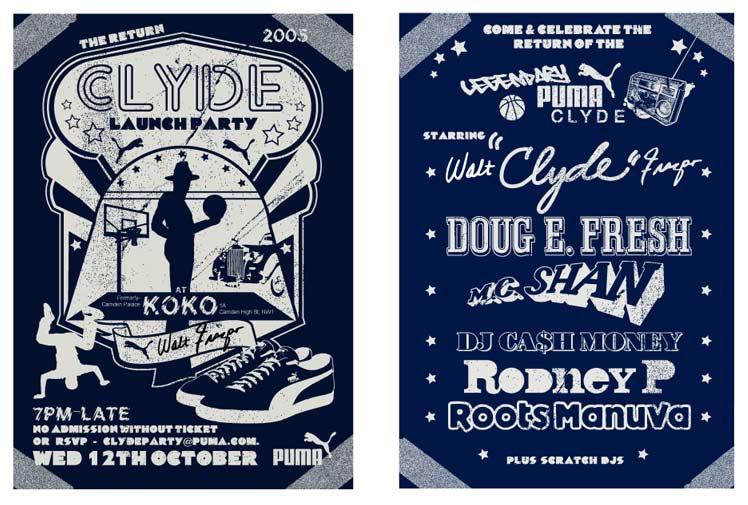
I'm serious! Think about it ... back when Hoxton was still edgy Levi's did a party in Shoreditch with Futura and Lee (I got my Frankenstein poster signed). Covent Garden's Boxfresh did a Wild Style party in 2003 with Charlie Ahearn. Last year, I discovered a remake of the 1982 Afrika Islam Zulu Beat show created in Nottingham?! Word! Fast forward and this summer Puma celebrate the re-launch of their Clyde sneaker. Nice to see some cool UK talent on the roster next to Doug E Fresh and MC Shan!
What else is happening? B-Boys break...since the Urban Games of 2001-3 the interest in breaking has seen a rise in events for B-Boys to throwdown. Man, anyone who has history with me knows I wish I could break!
I'm British-born Chinese from Bristol, UK. I’m LA-based. I’m a hip hop aficionado. After 15 years in London I moved to LA to pursue a new career and outlook on life.
Back in the 80s I was a DJ. In the 90s I contributed to the world's first street style exhibition at London's Victoria & Albert Museum. In 2011, I had my first interviews published. Today, I’m keeping busy with music, art, photos and writing.
"I love it when she calls my phone
She even got her very own ringtone
If that ain't love then I don't know what love is"
"Cupid's Chokehold," Gym Class Heroes
"...We give a f*&@ about status, who you are tomorrow, whether you beg or borrow or if you hit the Super Lotto, whether your girl looks like a minger or a Supermodel..."
"Wonderful Night," Fatboy Slim
"I wish I was little bit taller,
I wish I was a baller,
I wish I had a girl who looked good I would call her,
I wish I had a rabbit in a hat with a bat and a '64 Impala"


.jpg)